
Learn with Chord Compass
Best Piano Books for Beginners: 6 Picks
Compare the best piano books for beginners, including method, theory and performance books, to find a starting point that suits your age and learning style.

The best piano books for beginners serve different purposes. Some give you a sequence of lessons, some develop theory, and others provide extra pieces to play. This shortlist includes our own Chord Compass Academy book alongside five other titles. The comparison draws on the publishers' descriptions; it does not claim hands-on testing or rank one book as best for every learner.
1. Chord Compass Academy
Chord Compass Academy is an online music education business with downloadable piano, music theory and music-reading books. Its piano fundamentals book, Root Position, Edition 2, is a 301-page PDF for learners who want to work through ideas at their own pace.
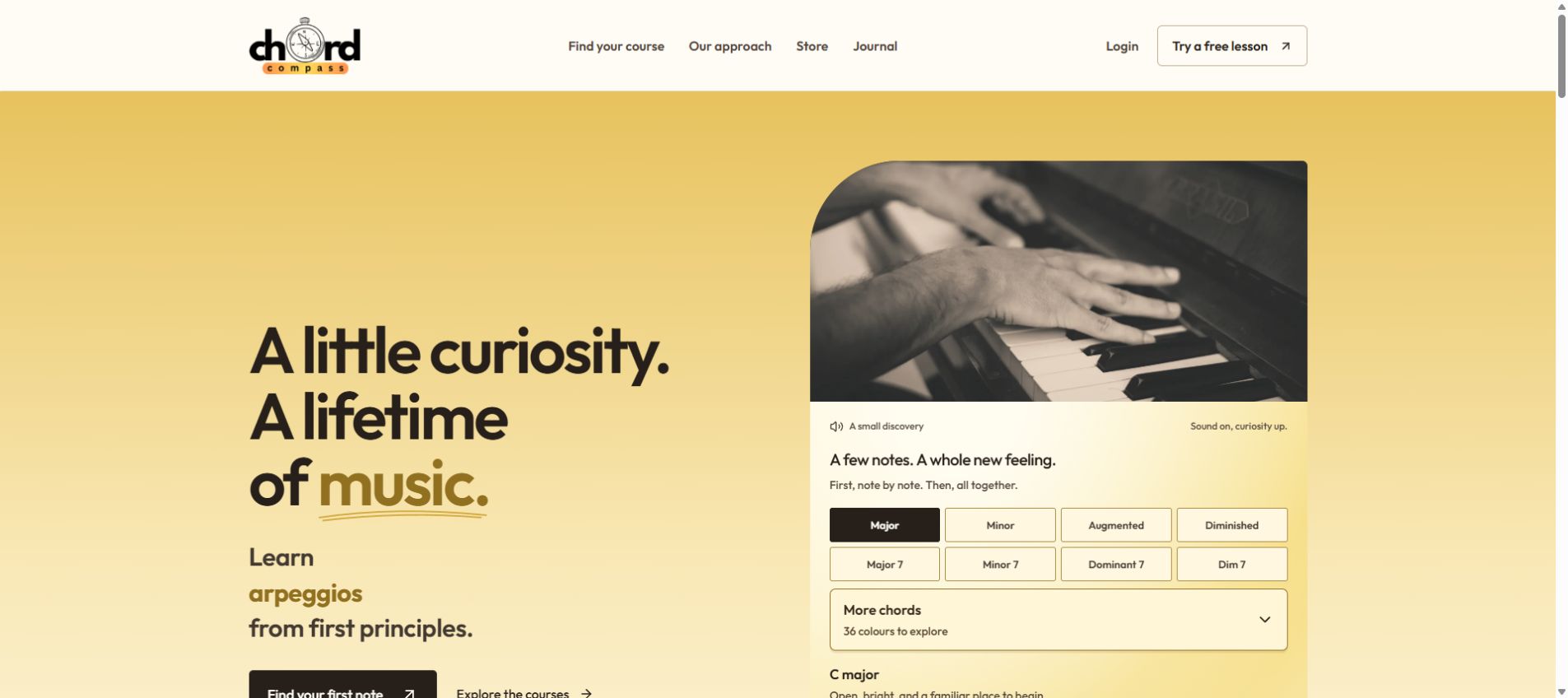
If you want a book with a planned route through the basics, Root Position, Edition 2 is the natural place to explore. The site also offers separate one-to-one online music lessons, rather than including lessons with an ebook.
2. Hal Leonard Adult Piano Method Book 1
Hal Leonard Adult Piano Method Book 1 is a method book for adult beginners, with online audio tracks for self-paced learning. It may suit you if you prefer a lesson sequence and want to hear the material as you work through it.
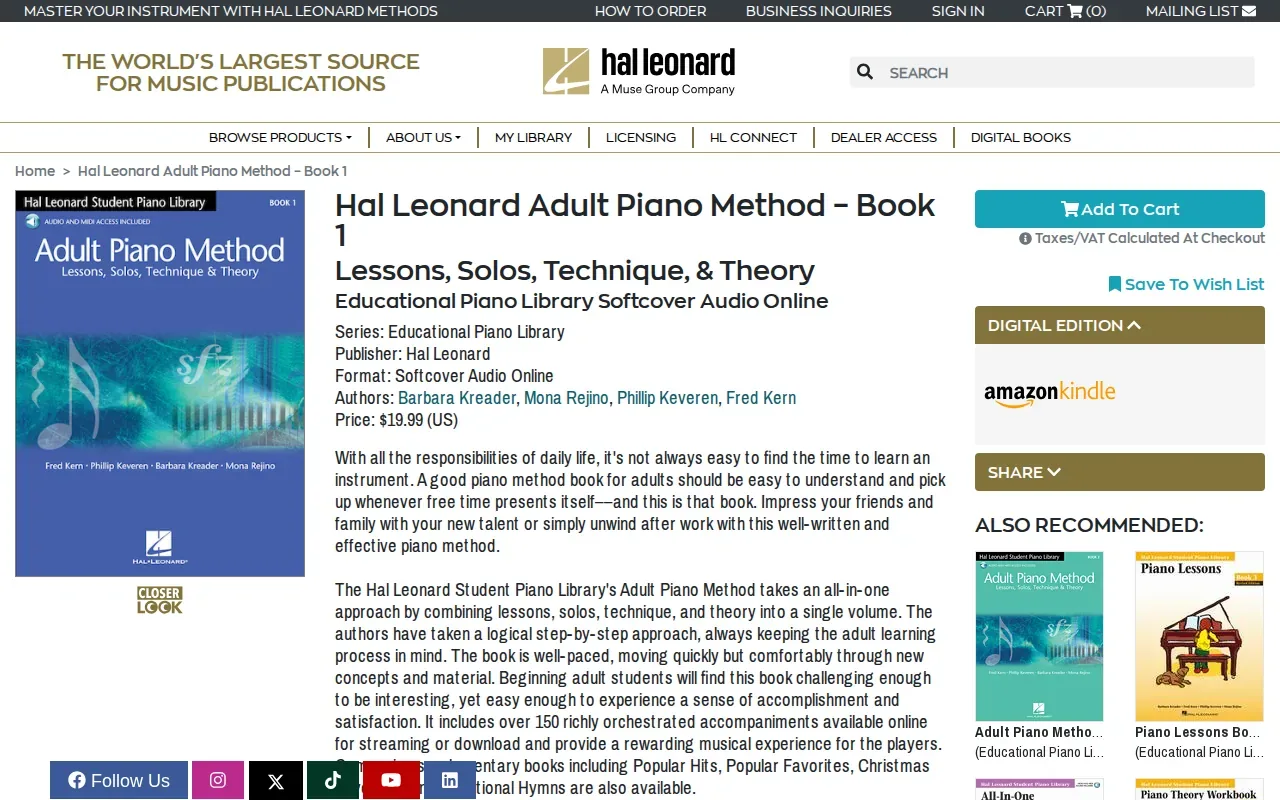
This edition combines lessons, solos, technique and theory in one volume, with accompanying online audio. Check the edition you choose and how you access its recordings before buying, especially if you are considering a used copy.
3. Faber Piano Adventures Primer Level Performance Book, 2nd Edition
Faber Piano Adventures Primer Level Performance Book, 2nd Edition is a solo collection of 28 pieces. The pieces reinforce ideas presented in the Primer Lesson and Theory books, so it can suit a learner who wants more music to play alongside lesson work.
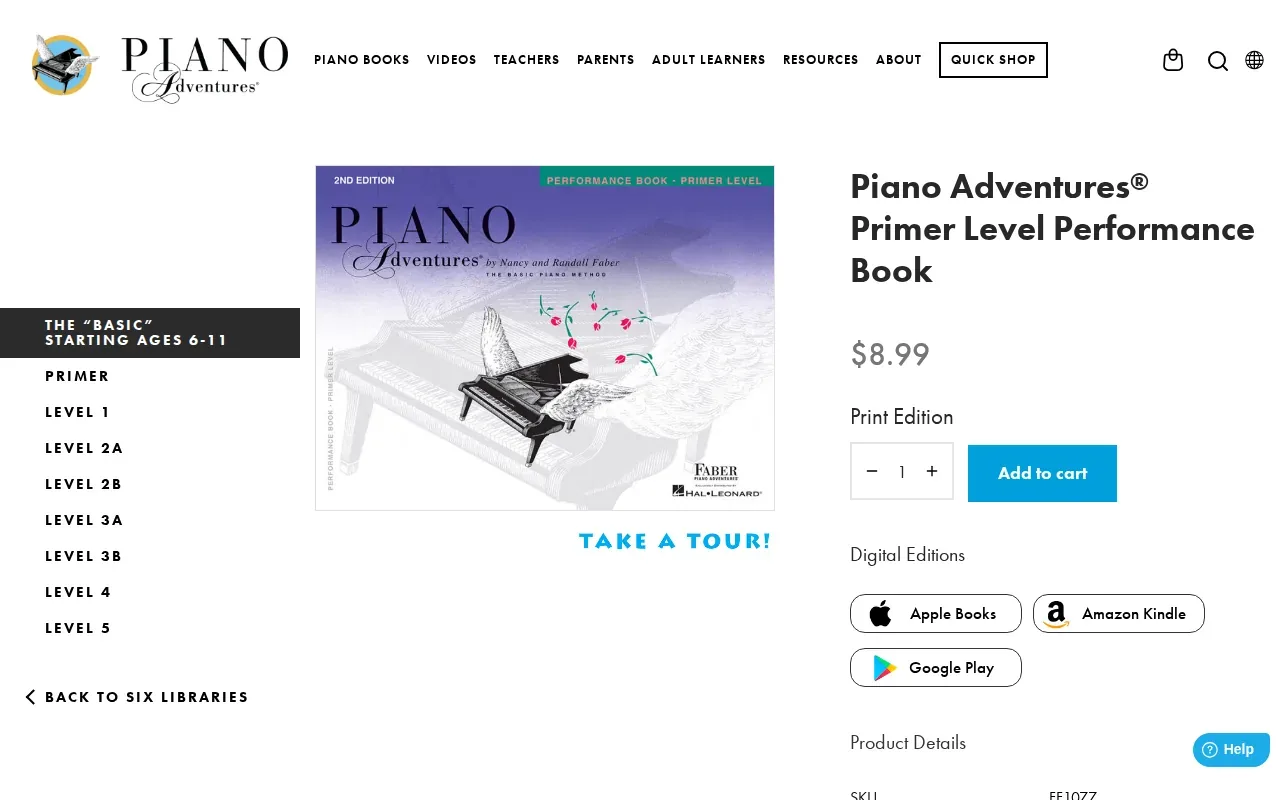
The Primer Level name makes this a sensible option to consider for an early learner using the related Primer materials. It’s also a useful distinction from a method book: this title centres on solo pieces, rather than serving as the sole course book in this shortlist.
4. Faber Piano Adventures Primer Level Theory Book 2nd Edition
Faber Piano Adventures Primer Level Theory Book 2nd Edition focuses on reinforcement and creative use of basic theory concepts. It may suit a beginner who wants written theory work to support what they’re learning at the keyboard.
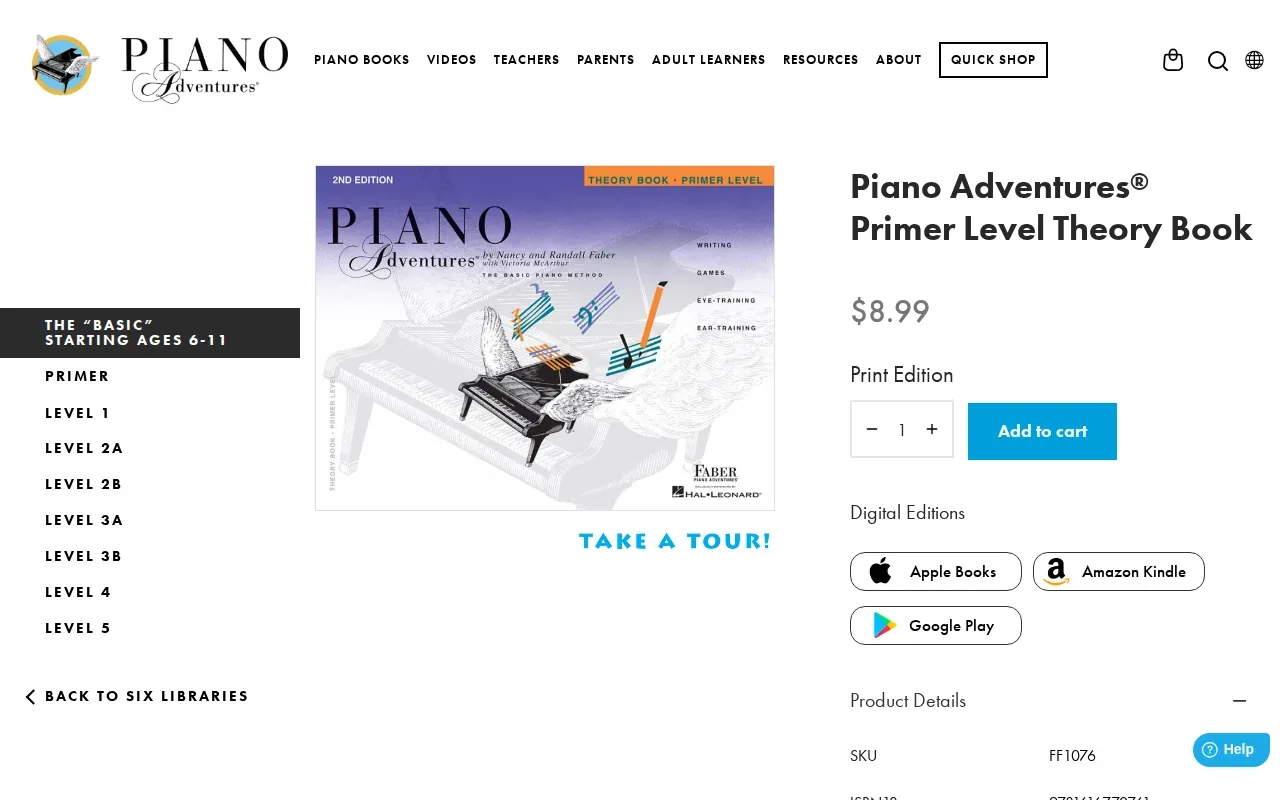
This is a supplement, not the performance collection described above. That difference matters when you’re choosing: pick the theory book if you want to strengthen your understanding on paper, and the performance book if you want more solo pieces to play.
Chord Compass Academy also has a separate resource for learners who want to connect notes, intervals, chords and harmony: Music Theory, Decoded, Edition 2. It’s another route for self-directed study, not a claim that the two books follow the same course.
5. Prelude by Piano Pronto
Prelude by Piano Pronto is a primer-level piano lesson book for beginners of all ages with no prior experience. It’s the most direct match here if you’re starting from the beginning and want a book described as a first step in piano lessons.
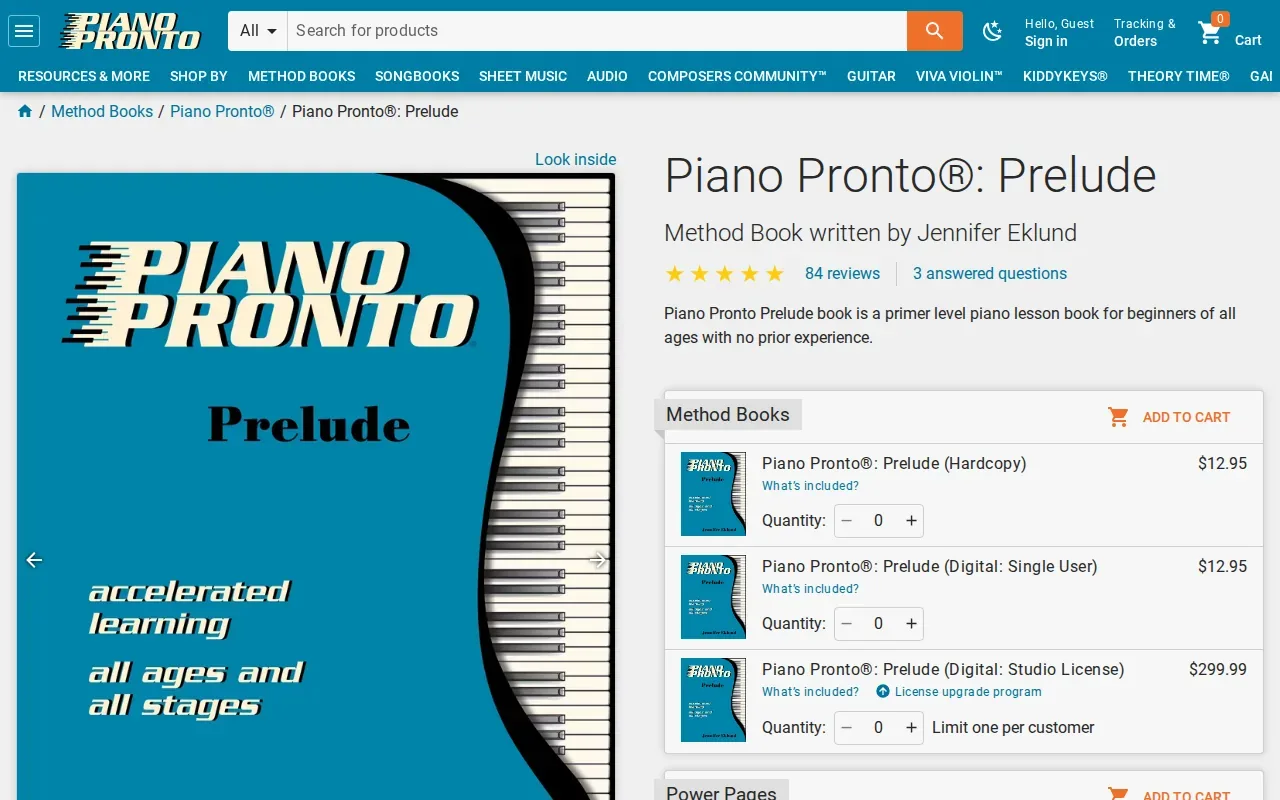
The publisher describes Prelude for all ages, but its guidance also distinguishes the book's faster pace from a slower route for very young beginners. Look at the sample pages and consider how much explanation and adult support a child will need. For an adult beginner, check whether the pace and musical material feel manageable and inviting.
6. Movement 1 by Piano Pronto
Movement 1 by Piano Pronto is a beginning-level piano lesson book for learners of all ages who have completed Piano Pronto Prelude. It’s the clear next choice for someone who has finished that book and wants to continue within the same sequence.
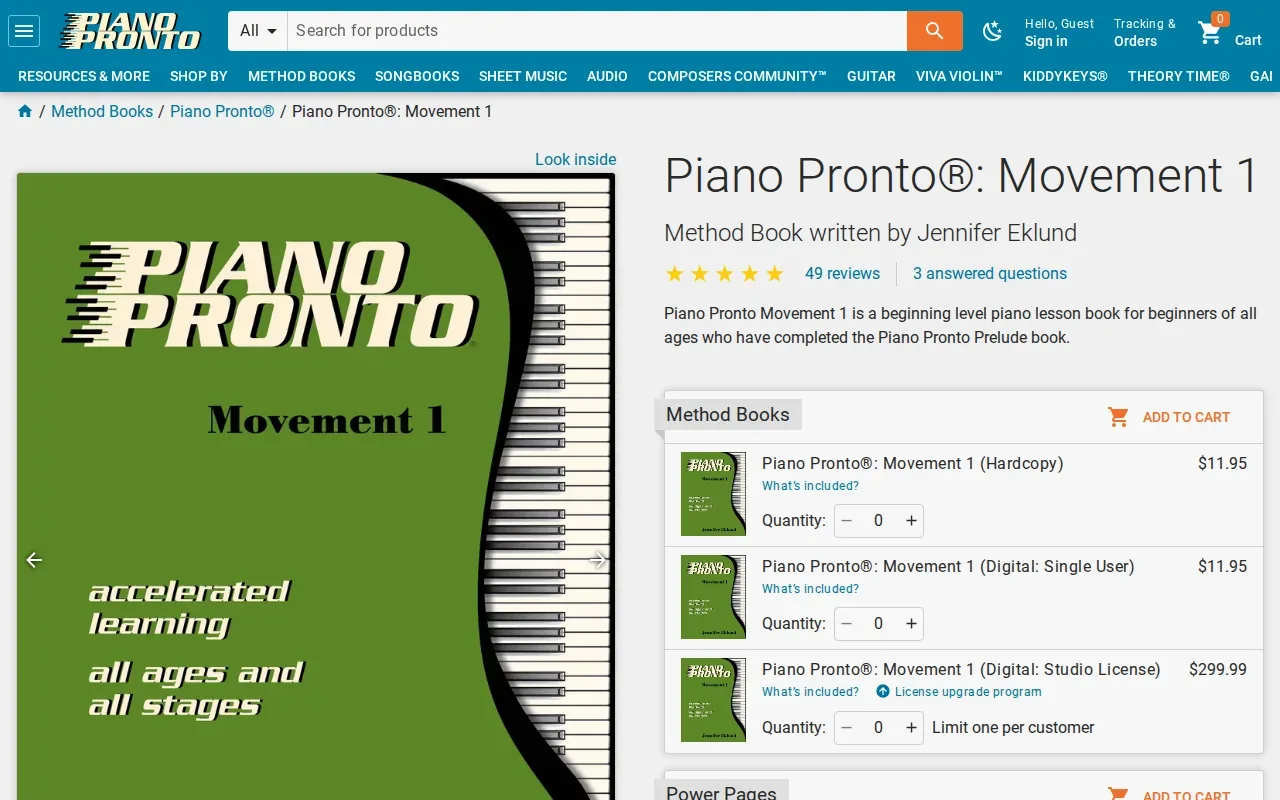
This title is a better fit for continuing beginners than for someone choosing a first piano book. Movement 1 follows Prelude rather than serving as the starting point.
Compare the six books by learning style, level and support
The best choice depends on the job you need the book to do. A method book gives your lessons a path. A theory title helps you study ideas on paper. A performance collection gives you more pieces to shape and play.
| Book | Best fit | What sets it apart |
|---|---|---|
| Chord Compass Academy | Self-directed piano fundamentals | Downloadable Root Position, Edition 2 PDF |
| Hal Leonard Adult Piano Method Book 1 | Adult beginners who want audio | Online audio tracks for self-paced learning |
| Faber Piano Adventures Primer Level Performance Book, 2nd Edition | Learners seeking solo pieces | 28 pieces that reinforce Primer concepts |
| Faber Piano Adventures Primer Level Theory Book 2nd Edition | Learners seeking theory practice | Reinforces and applies basic theory concepts |
| Prelude by Piano Pronto | Beginners with no prior experience | Primer-level lesson book for all ages |
| Movement 1 by Piano Pronto | Learners who completed Prelude | Beginning-level follow-on lesson book |
Books also differ in how they introduce reading. Printed notation represents musical instructions, while playing lets you connect those instructions with sound. For learners building note-reading skills, Reading Music, Decoded, Edition 2 focuses on notation, rhythm and expression.
To use any beginner book well, pick a small passage and return to it across the week. First, read the notes and rhythm away from speed. Then play slowly enough to keep an even pulse. Once the notes feel more settled, pay attention to phrasing. The basics of musical notation are easier to follow when you connect what’s on the page with what you hear.
What to check before you buy a beginner piano book
Start with the first lesson you would actually use. A book can have an appealing cover and still begin beyond your current knowledge. In a preview, look for an explanation you can follow, an example you can understand and a task you could attempt at your keyboard. If the opening assumes skills you have not learnt, choose an earlier level or plan to work through it with a teacher.
Match the book to one immediate goal
Write down what you want help with now. Perhaps you can find notes but struggle to read rhythms. Perhaps you understand written exercises yet want more pieces to play. Or perhaps you need a sequence that starts with the keyboard itself. Use that answer to choose between a method, a theory supplement and a performance collection. Buying all three at once is optional; knowing the purpose of each purchase is more useful than building a large stack.
Check the format you will use at the piano
A downloadable PDF and a printed book ask different things of your setup. Before choosing a PDF, try reading a sample on the screen you intend to use. Check whether the notes are comfortably visible, whether the device sits securely on the music rest and whether you can turn pages without losing your place. If you prefer paper, check what the seller's licence permits before printing; purchasing a digital copy does not automatically give you classroom or studio reproduction rights.
For books with audio, check how it is supplied. A recording accessed through a code needs a working code, and a used copy may require extra checking. Listen to an available sample and consider how you would use it: to hear the melody, understand the rhythm or play with an accompaniment. Audio is useful support, but a recording cannot watch your hands or respond to a question in the way a teacher can.
Look for explanations you can act on
Choose a preview that helps you do something specific. After reading an explanation of a chord, for example, could you identify its notes and try it slowly? After a rhythm example, could you describe how the notes fit into the beat? If a page leaves you guessing, write down the question. A teacher may be able to help, or another book may explain that particular idea more clearly for you.
For a child, consider who will help between lessons. Attractive illustrations alone do not tell you whether the reading level, pace or hand coordination will suit that learner. For an adult, consider whether you enjoy the musical examples enough to return to them. Neither choice needs a promise of rapid progress. A useful resource gives you a clear task and a reason to listen carefully.
How to use your first book at the piano
Choose a small passage and one focus for the session. You might aim to keep its pulse steady, find its notes without hesitation or make the end of a phrase sound settled. Read any instructions first. Try the passage slowly, notice one difficulty, and work on that part before playing the whole passage again. Treat this as a usable routine you can adjust, rather than a fixed programme that every learner must follow.
If coordinating both hands is the obstacle, try each part separately to understand it, then bring them together at a pace you can follow. If reading is the obstacle, point out the notes or rhythm before playing. Avoid changing several things at once: a faster tempo, new fingering and a different rhythm can make it harder to tell which change helped.
Keep a brief note of what you tried and what you want to revisit. “The second line stops flowing when the left hand enters” gives your next session a clearer purpose than “practise more”. When a familiar passage feels comfortable, listen for phrasing and tone instead of simply increasing speed. Ask a teacher for feedback when the written explanation leaves you unsure.
Be cautious about claims that one practice schedule guarantees results. A study of spacing during beginner piano learning found no spacing advantage for the short tasks and brief intervals it tested. That does not establish an ideal daily routine or show that breaks are unhelpful. Use a manageable schedule, pay attention to the task in front of you and adjust it as your learning changes.
Frequently asked questions
How do I choose a piano book as a complete beginner?
Choose a book that says it’s for learners with no prior experience, or one that clearly begins at primer level. Then decide what support you want: a lesson sequence, audio, theory practice or solo pieces. If you’re unsure, a method book is usually the most direct starting point, while a theory or performance book can support it.
Are these piano books suitable for adults?
Some are described for learners of all ages, while Hal Leonard Adult Piano Method Book 1 is specifically an adult method title. Prelude and Movement 1 by Piano Pronto are described for beginners of all ages. Think about the tone and type of support you prefer, then choose a book that matches your current level.
Should I choose a method book or a theory book?
Choose a method book if you want a sequence of piano lessons to follow. Choose a theory book if your main goal is to reinforce music concepts on the page. Theory and playing can work side by side: learn an idea, find it at the keyboard, then listen for how it changes the sound.
How many pages should I practise each day?
There isn’t one page count that suits every learner. A new passage may take several sessions, while a familiar one may need only a quick review. Set a small goal, such as keeping a short phrase steady, and stop when your attention or accuracy starts to fade. The aim is careful practice, not page-turning speed.
When should I move on to the next piano book?
Move on when the current book’s material feels familiar enough for you to play with care, not simply because you’ve reached its final page. If you’re following Piano Pronto’s sequence, Movement 1 is intended for learners who have completed Prelude. For another series, match the next book to the level you can play comfortably.
Choose your starting point
For a self-directed start with piano fundamentals, we recommend exploring Chord Compass Academy’s Root Position, Edition 2. Visit the Root Position page to view the book and its two-chapter preview, then choose a first passage to try at the piano.