
Learn with Chord Compass
Best Books for Learning Music Theory: 6 Picks
Compare the best books for learning music theory, from beginner PDFs to harmony textbooks, with clear advice on level, format, exercises and study support.

The best books for learning music theory give you a clear next step, not a page of terms to memorise. Some start with the basics; others expect you to read music and want a deeper look at harmony. Here are six options, led by Chord Compass Academy’s focused theory PDF for piano learners.
1. Chord Compass Academy: A structured theory PDF
Chord Compass Academy’s Music Theory, Decoded, Edition 2 is a 150-page PDF for beginner and returning piano learners. It covers theory and harmony in a self-directed format, with exercises and answers to help you work through ideas as you go.

That makes it a useful starting point if you want to connect the notes on a page with what your hands play. You might meet a chord, try it at the piano, then notice how a change in one note shifts its sound. First, note by note. Then, all together.
Music theory can feel less abstract when you can hear and test an idea. Read a short point, play it at the piano, and pause when your ear needs time. For example, the Open University’s explanation of triads connects chords with the notes of a scale. Try building C–E–G, then listen to those notes together.
If notation is the part that slows you down, Chord Compass Academy also has a separate reading book. For a wider look at piano study choices, compare this theory-focused approach with the picks in our piano books for beginners shortlist.
2. Hal Leonard Pocket Music Theory: A compact reference
Hal Leonard Pocket Music Theory, by Keith Wyatt and Carl Schroeder, is a step-by-step guide to harmony and theory for musicians. Its compact format is meant to make it handy as a reference, while its subject list reaches well beyond the first few basics.

The book covers intervals, rhythm, scales, chords and key signatures. It also moves into transposition, chord inversion, key centres, harmonising major and minor scales, extended chords and modulation. That gives you a route from naming a chord to asking how it works in a progression.
It may suit a player who wants one book to dip into when a term or harmony question comes up. For example, if you know a chord shape but want to understand its inversion, you can look up the idea, then test the sound at your instrument.
Ear work belongs alongside written theory. Try listening to a chord change before you name it, then use the book to check your thinking.
Its wide topic range makes it a handy reference. If you want a guided, piano-focused path through the basics, compare it with the first pick before you choose.
3. The AB Guide to Music Theory, Part I by ABRSM: A fundamentals route
The AB Guide to Music Theory, Part I, by Eric Taylor and published by ABRSM, introduces basic elements of harmony and musical structure. It also covers rhythm and tempo, then introduces pitch, so it can suit a learner who wants to build a foundation before tackling denser harmony.
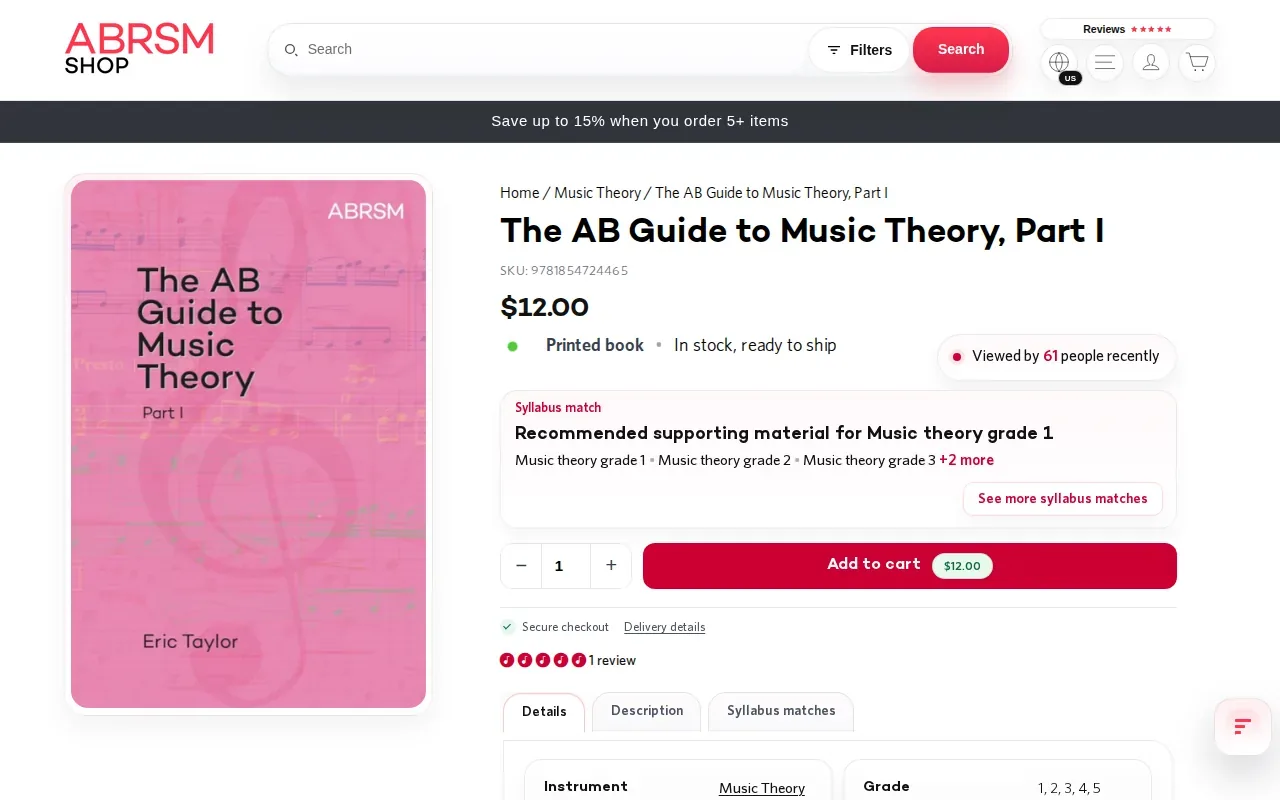
Start with the idea you can hear or play today. A steady pulse gives rhythm a physical shape; a change of pitch lets you notice how notes relate. As those pieces settle, harmony has something to grow from. This order can help if a broad reference book feels like too many doors open at once.
For grade-based study, choose resources that match the learner’s current level before adding extra practice. That route is most relevant when your goal includes grade-based study; the AB Guide itself is a broader fundamentals text.
Think of this as a foundations choice. If your main question is how chords behave in a piece, you may want to move on to a tonal harmony text once rhythm, pitch and basic structure feel familiar. If your aim is to strengthen core theory first, this is a measured place to begin.
4. Concise Introduction to Tonal Harmony Third Edition by W. W. Norton & Company: Tonal foundations
Concise Introduction to Tonal Harmony Third Edition by W. W. Norton & Company is a tonal harmony text. It is a step towards focused study of how chords relate within a key, rather than a general first encounter with every part of music theory.
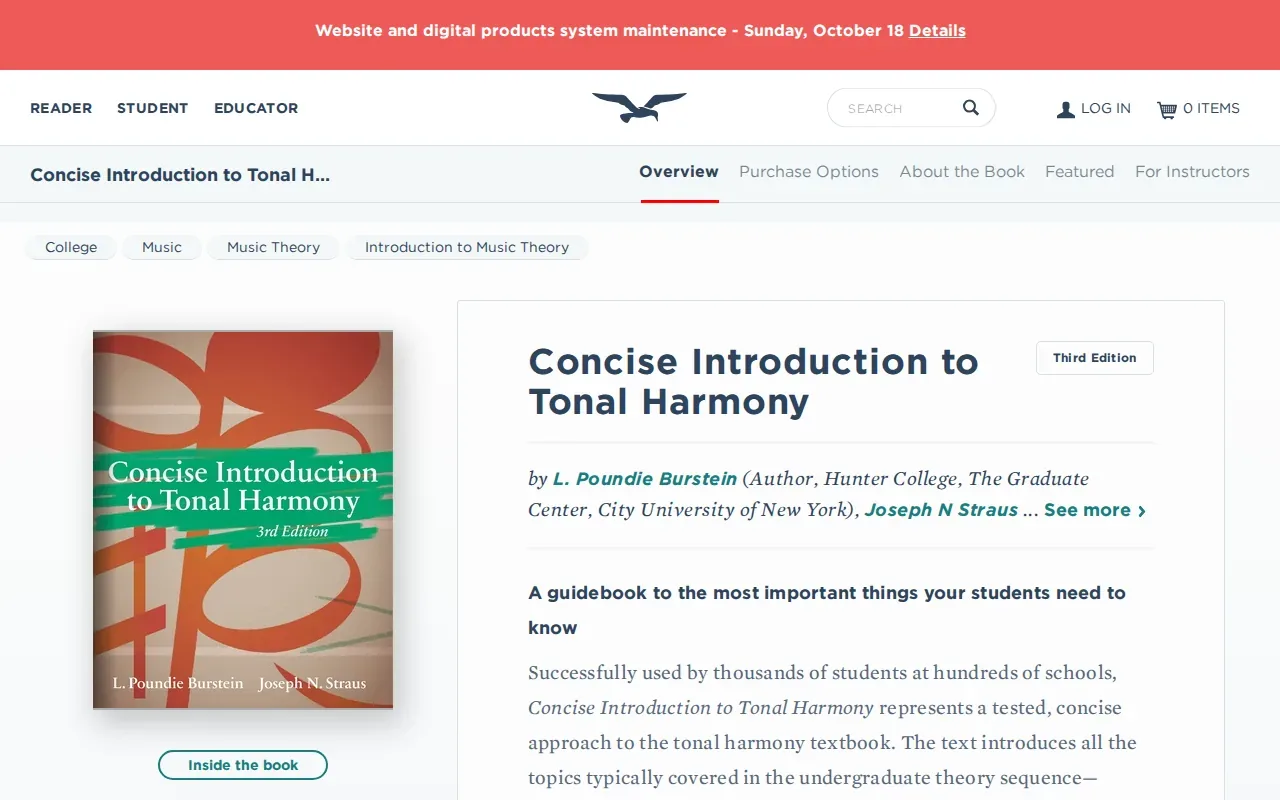
The word “tonal” points to music organised around a centre, such as a home key. When you hear a chord progression settle, you can ask what made that ending feel settled. A harmony text gives you terms and patterns for that kind of listening, then helps you look more closely at the notes on the page.
This is an undergraduate harmony textbook, so it makes most sense if tonal harmony is the subject you want to study in depth. A learner who is still getting comfortable with note names or pulse may get more value from a fundamentals-first book before taking this step.
Use it when your questions have narrowed. For instance, if you can already follow a key and want to understand the role each chord plays, a dedicated tonal text is a more direct fit than a pocket guide that ranges across many topics.
5. The Complete Musician Fifth Edition by Oxford University Press: A broader course text
The Complete Musician Fifth Edition by Oxford University Press links theory with music in context and performance. Its publisher describes digital resources for students, including an enhanced e-book with example audio and Skill Check exercises, audio for musical examples, term flashcards and solutions for Skill Checks.
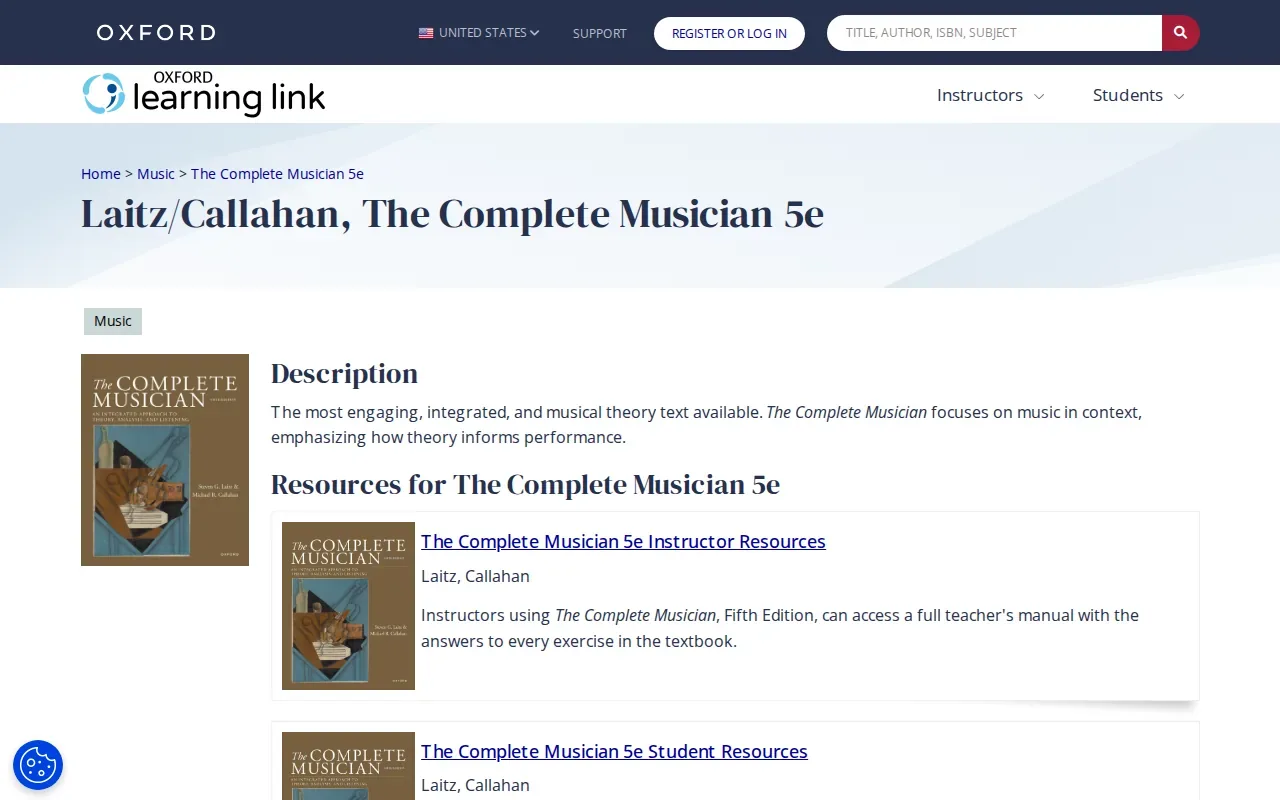
That mix can help if you want more than written explanation. Read a concept, listen to an example, then use a Skill Check to see whether you can apply it. Audio can also bring a notation example back to sound, which matters when the goal is to understand music rather than only name its parts.
The Complete Musician is a course text with a set of digital study supports. Before choosing it, consider whether you want that broader course-style structure or a shorter book you can work through on your own between piano sessions.
Check which digital resources and access period come with the edition you are buying. Student Skill Check solutions are different from the teacher’s manual of answers. It fits a learner ready to give theory more regular attention. If you prefer a shorter route into chords and harmony, a 150-page PDF may feel easier to pick up for a focused study session.
6. Treatise on Harmony by Dover Publications: A historical perspective
Treatise on Harmony by Dover Publications presents the work on harmony by Jean-Philippe Rameau. It is a historical choice for readers interested in how people have written about harmony, rather than a gentle first workbook for learning basic notation.
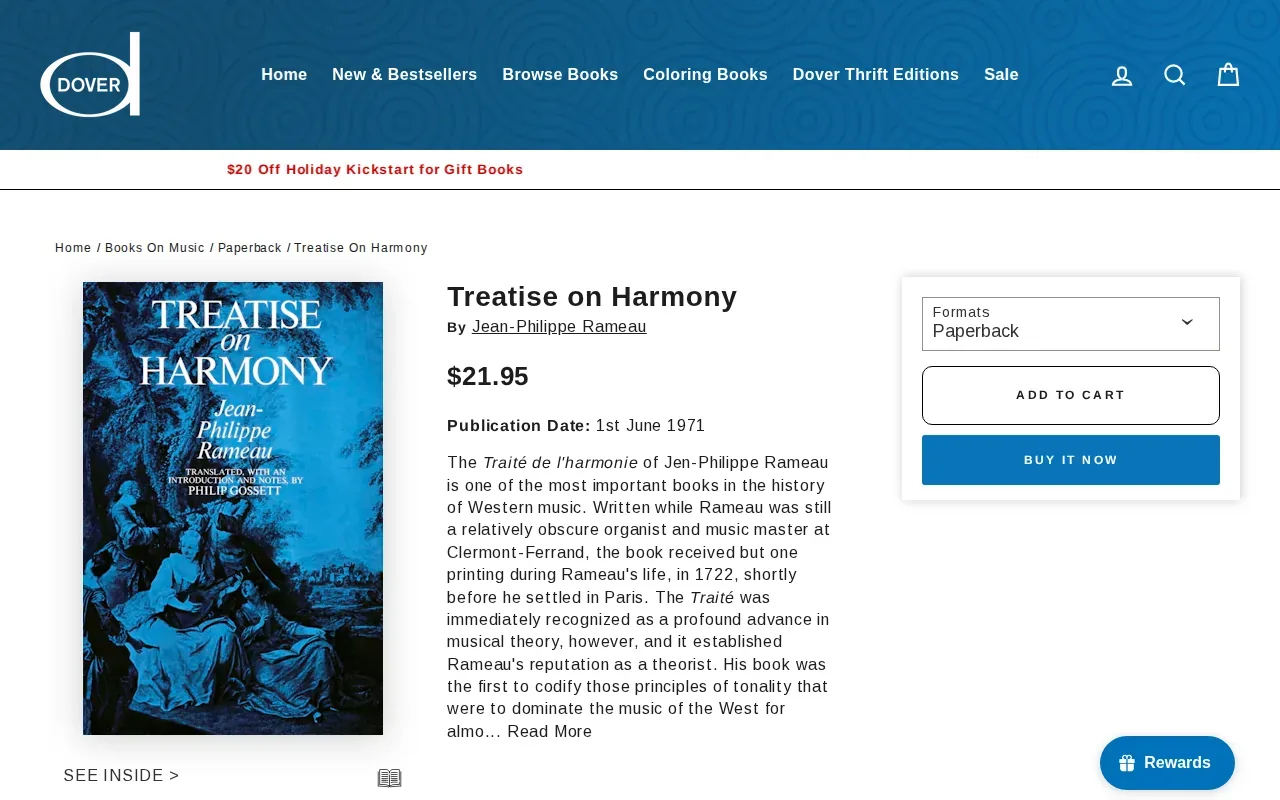
Rameau’s treatise is a historical source for studying eighteenth-century thinking about harmony. That makes it a different kind of pick from a modern beginner text: you are approaching a work with a place in music history, not simply choosing the shortest route to your next chord.
If you are curious about the roots of harmony as a written subject, it may interest you. If you need help reading a score or naming the chords in a piece you are learning, start with a book that directly addresses those foundations, then return to historical writing when you have the musical terms to follow it.
Let this one follow your curiosity. It can add perspective after you have a working grasp of the ideas that modern theory books explain more directly.
Compare the 6 music theory books at a glance
The right choice depends on the question you want your next study session to answer. Use this comparison to match the book’s scope and format to the way you like to learn.
| Book | Study focus | Format or support | Starting point |
|---|---|---|---|
| Chord Compass Academy: Music Theory, Decoded, Edition 2 | Fundamentals and harmony for beginner and returning piano learners | 150-page PDF, exercises and answers | Beginner or returning pianist |
| Hal Leonard Pocket Music Theory | Wide-ranging theory and harmony reference | Compact book; digital access is cloud-based | Reader wanting a compact reference |
| The AB Guide to Music Theory, Part I by ABRSM | Basic harmony, structure, rhythm, tempo and pitch | Printed book | Reader building a theory foundation |
| Concise Introduction to Tonal Harmony Third Edition by W. W. Norton & Company | Tonal harmony | Textbook | Reader ready for undergraduate harmony |
| The Complete Musician Fifth Edition by Oxford University Press | Theory in musical context and performance | Enhanced e-book resources, audio and Skill Checks | Reader wanting a course text |
| Treatise on Harmony by Dover Publications | Historical writing on harmony | Paperback | Reader with basic harmony knowledge |
Formats and access conditions matter as much as length. Chord Compass Academy’s theory book is a downloadable PDF; a cloud-based digital book depends on the publisher’s reading service. The Chord Compass Academy shop lists the academy’s downloadable books. Website screenshots show the pages reviewed; any displayed prices or availability can change by date and country.
Frequently asked questions
Which music theory book is best for a beginner?
For a beginner piano learner who wants a focused, self-directed start, Music Theory, Decoded, Edition 2 is a strong fit. It is a 150-page PDF aimed at beginner and returning piano learners, with exercises and answers. If you want a broader reference across theory topics, Hal Leonard Pocket Music Theory covers a wider range.
Can I use a music theory book if I play guitar or another instrument?
Yes, several picks cover general music theory rather than piano technique alone. Hal Leonard Pocket Music Theory is a guide for every musician, while The AB Guide to Music Theory, Part I covers basic theory topics. For ideas that involve chords, try them on your own instrument and listen for the change in sound.
Which book is best for learning harmony?
For a focused study of tonal harmony, consider Concise Introduction to Tonal Harmony Third Edition by W. W. Norton & Company. Hal Leonard Pocket Music Theory also covers harmony alongside many other topics. If you are new to theory, begin with basic pitch, rhythm and chord ideas before moving into a dedicated tonal harmony text.
Do music theory books include audio or online exercises?
Some do. The Complete Musician Fifth Edition has digital resources that include example audio and Skill Check exercises. Hal Leonard Pocket Music Theory’s digital edition is cloud-based and requires internet access. Check the format that suits your study habits, especially if you want to listen while you read.
Should I choose a short book or a larger course text?
Choose a shorter book if you want to focus on a few ideas at a time or study between other commitments. A course text may suit you if you want a broader structure and supporting study tools. Start with the question you most want answered, such as how a chord is built or why a progression feels resolved.
Choose your next step
Try the book preview
For a structured introduction to theory, explore Music Theory, Decoded, Edition 2 from Chord Compass Academy and try its two-chapter preview before choosing the book.