
Learn with Chord Compass
How to Practise Piano Effectively: A Step Plan
Learn how to practise piano effectively with focused sessions, slow passage work and steady rhythm. Follow a clear routine you can adapt to your day.
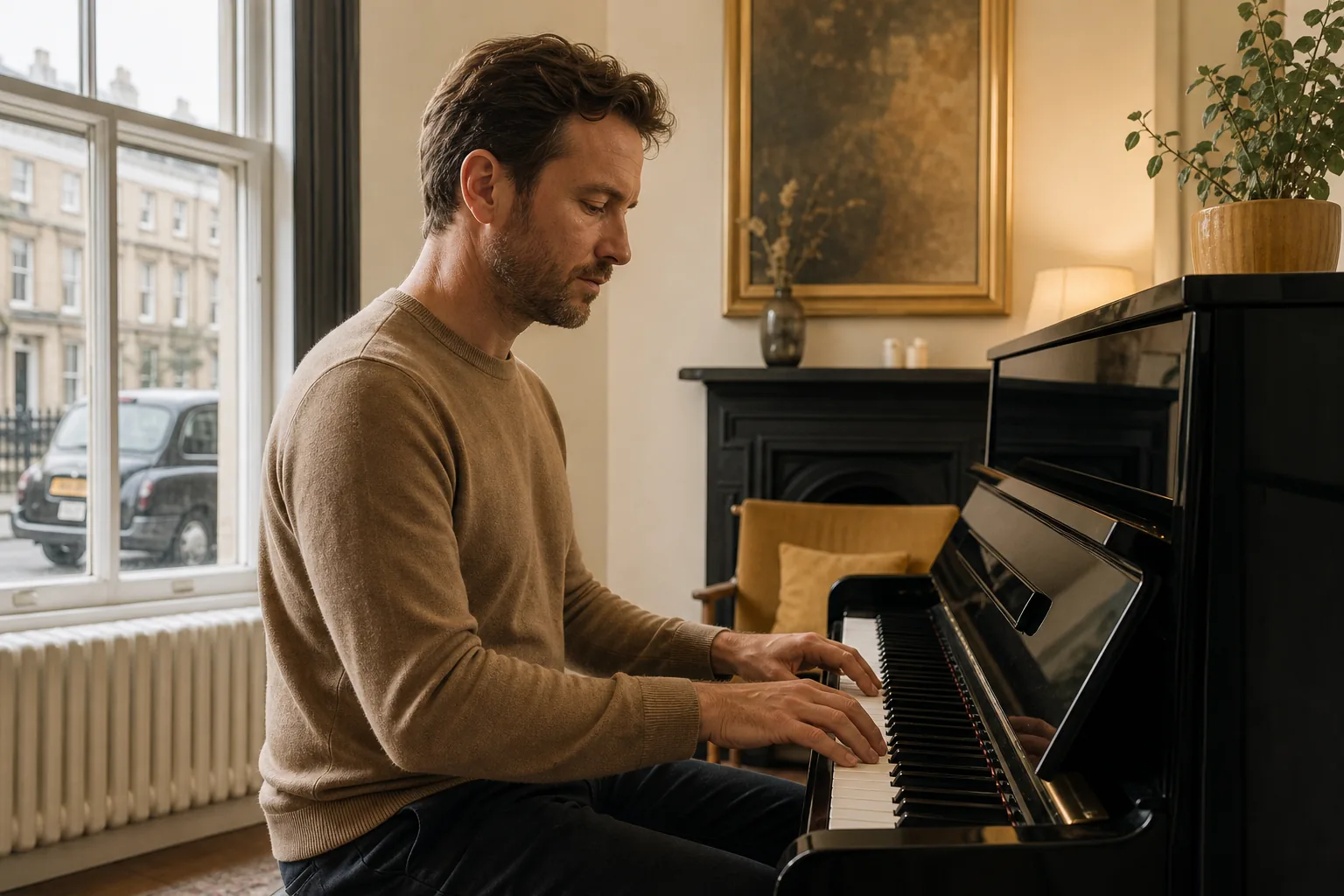
If your piano practice feels stuck, more minutes at the keyboard may not be the answer. To learn how to practise piano effectively, set a small goal, work on one clear problem and stop before tired playing takes over.
Step 1: Set one clear goal for each session
Before you play, write down one thing you want to improve. Make it small enough to check. “Work on the piece” is too broad. “Play bars 9 to 12 with the left hand at a steady, slow pulse” gives you a place to begin and a way to tell when you’re done.
Let’s say a new piece sounds fine until the left hand changes position. Make that shift today’s goal. On another day, you might focus on a fingering choice or the shape of a melody. Keep the goal tied to music you want to play, rather than adding drills that have no clear place in your plans.
Choose a session length that fits your attention and the task. If you have less time, use the time you have with care: name the task, set a timer, and give that task your full attention. If ten minutes are available, choose a task small enough to attempt within that time.
Plan a simple order before you sit down. Start with a gentle warm-up, then work on your chosen passage. Leave a little room to play something you enjoy. That last part matters. Practice needs effort, but it should still sound like music.
A practice journal needn’t be grand. Write the date, your goal and one note about what happened. You could jot down, “Bars 9 to 12, left hand, slow pulse; the shift was easier after I changed the fingering.” That gives tomorrow’s session a clear starting point instead of asking you to solve the same puzzle again.
If you’re choosing a book to help build your routine, our best piano books for beginners can help you compare different starting points.
Session check: Can you say what you’ll work on, and what a clean attempt will sound like? If so, you’re ready to play.
Step 2: Get comfortable at the piano and orient yourself
Take a moment to settle before the first note. Sit where you can reach the middle of the keyboard without leaning. Let your shoulders drop. Let your wrists move with your hands instead of holding them sharply raised or dropped against the keyboard edge. Your hands should feel ready to move, not fixed in place.
Check in as you play. If your wrists feel tight, pause and let your arms rest. Don’t push through discomfort or try to force your hands into a shape that feels strained. A relaxed hand can still be alert. Think of it as a soft curve, not a claw.
Then find your way around the keys. Black keys repeat in groups of two and three. Find a pair, then the white key just to its left: C. Find a group of three, then the white key just to its left: F. These landmarks make it easier to orient your hands when you move to a new part of the keyboard.
Middle C can help you connect the keyboard to written music. But it isn’t the physical centre of every piano. Treat it as a musical reference point, then use the other repeating groups to find your way across the keys. A beginner piano resource is another place to explore basic piano learning.
Before a tricky passage, warm up with a few notes or a short scale you already know. Play slowly enough to notice an uneven touch or a tense wrist. Don’t turn the warm-up into a test. Its job is to bring your attention to the keys and help your hands feel ready.
Chord Compass Academy’s Root Position, Edition 2 is one resource for learners who want to connect piano foundations with deliberate practice. Use the book to support your own goal, rather than rushing ahead. The academy also has an account registration page for its online account area. Personal lessons are a separate offer from the downloadable book.
Now your hands know where they are. Pick the spot that needs work.
Step 3: Practise difficult passages slowly, one hand at a time
When a passage falls apart, don’t keep restarting the whole piece. Find the smallest part that causes trouble. That might be two bars, a chord change or even one beat. Work there first, then reconnect it to the music around it.
Play one hand at a time. Start with the hand that feels less sure. Check the notes and fingering, then repeat the phrase at a pace where you can stay in control. A slow tempo gives you time to hear each note and notice where your hand needs to move next.
Next, try the other hand on its own. The two parts may each feel simple alone, yet become tricky when played together. That’s normal. Combining them is a separate coordination task, so start more slowly than you think you need to. If the notes blur or the rhythm slips, slow down again.
Bring both hands together for a short section. Aim for a few clean repetitions, not a long run of hurried attempts. If a mistake returns, stop and work out what caused it. Was the fingering awkward? Did one hand move early? Did you lose the pulse? Change one thing, then try again.
A metronome can make an uneven beat easier to hear. Start at a pace that feels almost too slow. As one practice check, try the passage accurately three times before making a small tempo increase. Three repetitions are a convenient test, not proof that the passage is learned. If mistakes come back, lower it. The metronome can handle the strict bit while you listen for an easy, even sound.
Give yourself a brief pause between attempts. A moment to release your hands and hear the phrase in your head can be more useful than playing it again straight away. You can also picture the fingering before you touch the keys. Use this silent preparation to plan notes you already understand, then check the result by playing and listening.
Once the small section feels secure, add the bar before it and the bar after it. This tests the joins, where a shift or a change in harmony can catch you out. Then try a longer phrase. You don’t need to play the whole piece every time you sit down.
In Root Position, Edition 2, Chord Compass Academy brings together piano technique, rhythm and harmony alongside practice advice. Keep the same principle in mind: a relaxed wrist and steady pulse matter more than forcing a faster tempo.
Step 4: Build steady rhythm and read a little music
Rhythm comes before speed. Before you play a new line, tap its pulse or clap the rhythm. Count aloud if that helps you keep the beat moving. Then play a short section slowly, with the same steady pulse from start to finish.
Try a four-bar phrase. First, tap the beat while looking at the music. Next, clap the rhythm and count through any rests. Then play one hand at a time. Put the hands together when each part feels steady on its own.
Rests still take time, even though you don’t play a note. Keep counting through them. A tie joins notes of the same pitch into one held duration, without a fresh attack on the second note. The Open University’s examples of dots and ties show how the values combine. If either mark makes a bar feel uncertain, clap that bar by itself before you return to the keys.
Use a metronome as a guide, not a permanent crutch. Begin with a click on each beat. Once the pulse feels steady, try playing without it. You’re checking whether you can keep time on your own. If your playing starts to rush, bring the click back and choose a slower pace.
Reading music also gets easier when you look for patterns. Notice whether a note moves up or down, or whether the melody repeats a shape. A few notes can outline a chord. Listening for how the phrase rests can help you make sense of the written line, instead of treating each note as an isolated puzzle.
For a separate sight-reading block, choose one easy line of unfamiliar music and aim to keep a steady pulse through a small slip. Don’t stop to repair every slip. This is a chance to keep the pulse and look ahead. You can mark a hard bar for focused work in another part of your session.
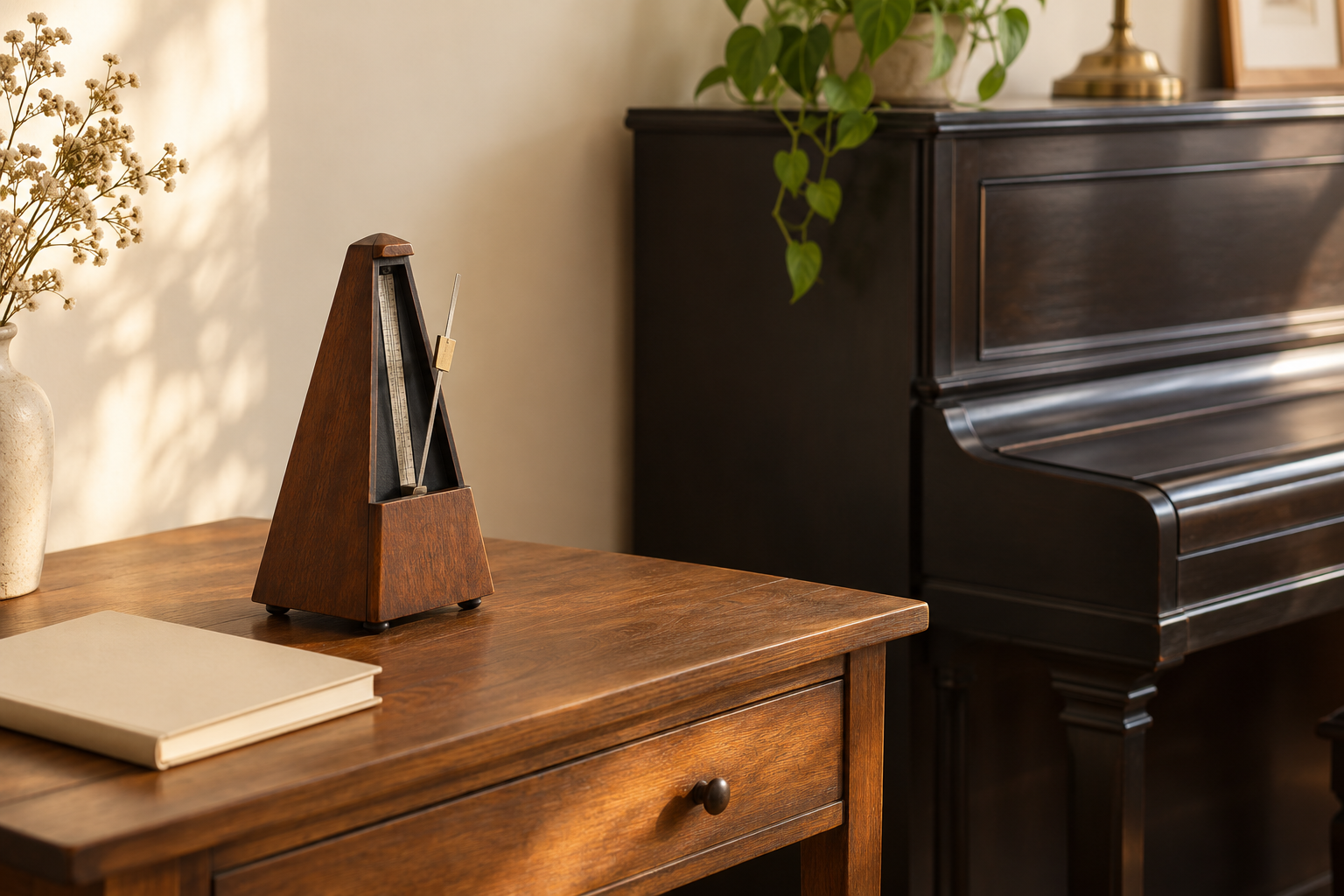
If notation or rhythm reading is a current goal, Reading Music, Decoded, Edition 2 is a downloadable learning resource from Chord Compass Academy. Use a few minutes with a fresh line of music, then return to the passage you’re learning.
Keep the pulse calm. The notes can catch up.
Step 5: Review what changed and plan your next session
Before you leave the piano, take a moment to review. What changed? Which part still needs work? Write one useful detail in your journal, such as the bar you practised or the tempo that felt steady. Skip broad notes like “better today”. They won’t tell you what to do next.
Then choose a first task for your next session. It might be to repeat the same passage at the same speed, or to try it once without the metronome. If it still feels uncertain, stay with the current step. You don’t need to raise the tempo just because you’ve practised the passage before.
A short recording can help you hear what’s hard to notice while playing. Record the same phrase now and then, then listen for one detail: does the pulse stay even? Can you hear the melody clearly? You don’t need to judge every note. Pick one thing to listen for, and compare it with your next recording.
Keep practice blocks short enough for your attention to stay with the task. If you practise for longer, take a break before fatigue sets in. A paper journal beside the piano works well. A note on your phone can work too, as long as it helps you find your next step instead of distracting you.
Progress may show up as a smoother hand shift or a steadier beat, not a whole piece suddenly sounding finished. Record those small changes. They give you a clearer picture than counting minutes alone.
Frequently asked questions
How long should I practise piano each day?
Choose a duration that fits the task, your attention and your day; there is no single requirement for every learner. Shorter sessions can still help when you choose one clear task and stay with it. If you have more time, split it into blocks with a pause. Stop or take a break if your attention fades or your hands feel tense.
Should I practise piano with one hand at a time?
Yes, hands-separate practice is useful when a passage feels difficult. It lets you focus on the notes, fingering and rhythm in one part before adding the other. Then combine the hands at a slower pace. If the passage becomes shaky, return to separate hands and build it again.
When should I increase the metronome speed?
Increase the speed only when you can play the passage accurately and steadily several times in a row. Make a small change, then listen again. If errors return or your timing slips, slow down. A clean passage at a gentle pace gives you a better base than a fast one full of guesses.
What should I practise when I only have 10 minutes?
Choose one small goal, such as a tricky bar or a short rhythm pattern. Spend a moment warming up, then focus on that task without stopping to play the whole piece. Finish by noting what worked and where you’ll begin next time. A short, clear session can keep your practice routine moving.
Should I record myself practising piano?
Recording yourself can help you hear details that are hard to notice while you play. Try recording one short passage, then listen for a single point, such as an even pulse or a clear melody. Keep the recording if you want to compare it later. Treat it as useful feedback, not a performance test.
Choose your next step
Try the piano book preview
Keep your next session simple: warm up gently, choose one passage and work at a pace that stays accurate. Write down one next step before you leave the piano. For a structured piano foundation, explore Root Position, Edition 2 from Chord Compass Academy and try its two-chapter preview.