
Learn with Chord Compass
Piano Chord Book: Seven Options Compared
Compare piano chord book options for beginners, returning players and theory learners, including chord references, a printable chart and structured piano PDFs.

A piano chord book can turn a jumble of keys into music you can shape and understand. Some picks here are quick references; others help you build chords into a steady practice routine. This comparison uses published descriptions to distinguish chord references, teaching books and visual aids. Here are six named options, plus a downloadable guide from Chord Compass Academy.
1. Chord Compass Academy
Chord Compass Academy is an online music education business with downloadable books for piano, music theory and music reading. Its Root Position, Edition 2 is a 301-page piano PDF for beginners and returning players who want a structured way to work on piano foundations.

A PDF is useful when you want to keep practising away from a live stream. Download it once, then return to a page at the piano without depending on a steady internet connection. That can make a difference when you practise while travelling or in a room with weak Wi-Fi.
Root Position, Edition 2 includes a 12-week practice plan and 24 original studies. That gives you a route through the material, rather than a pile of chord names to look up and forget. Start with a small idea, play it slowly, then listen for how it settles under your hand.
Chord diagrams can help you find the notes, but inversions show how the same chord can sit in a new position. A C major triad stays C, E and G when E or G moves to the bass; the sound and hand movement change. This shift in the lowest note is one way to describe an inversion. The Open Music Theory explanation of triads and inversions shows how the bass note determines the inversion.
For learners who want a book to support ongoing piano practice, Root Position offers broader foundations alongside practice material. It’s a downloadable PDF, not a printed book.
2. Ultimate Keyboard Chord Book by Hal Leonard: A broad chord-diagram reference
Ultimate Keyboard Chord Book by Hal Leonard is a reference built around a large set of chord diagrams. It suits players who want to look up many chord shapes, including less familiar ones, rather than follow a lesson sequence from page to page.
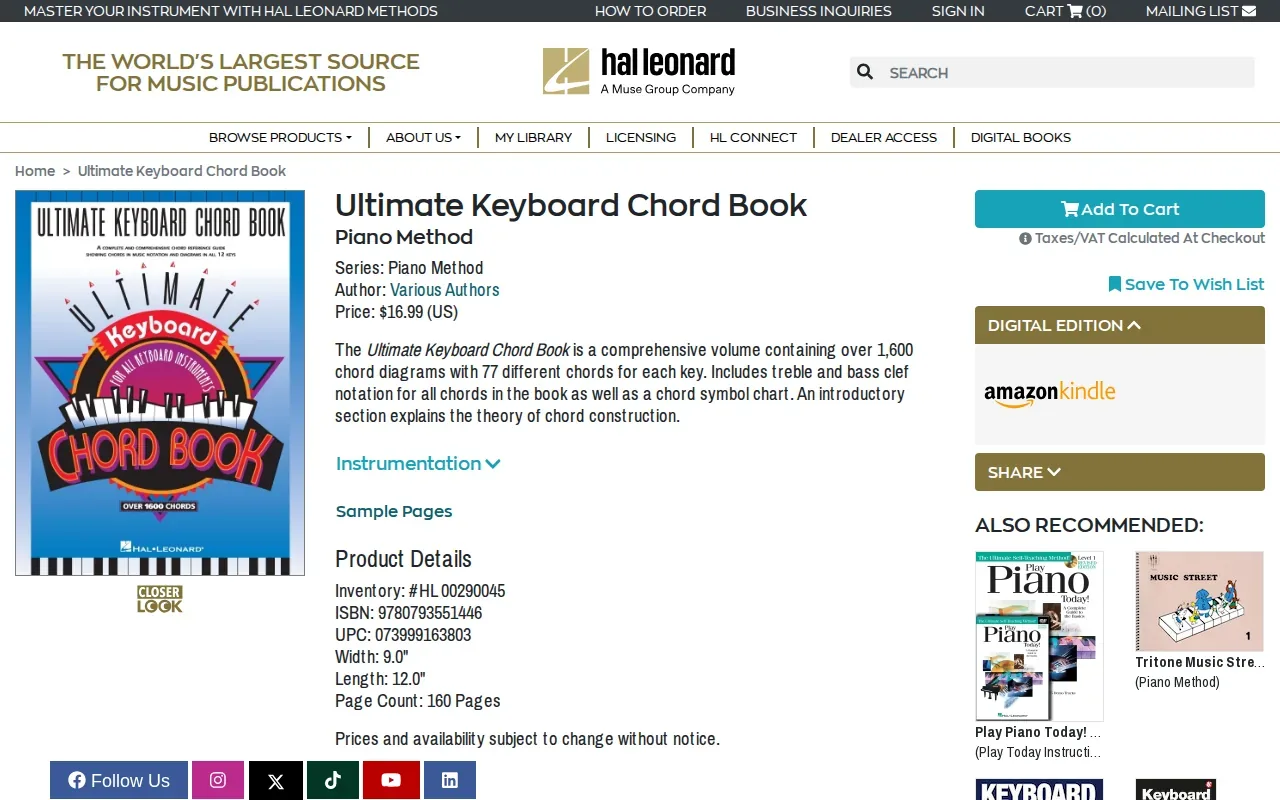
The book includes treble and bass clef notation, a chord symbol chart, and an introductory theory section on chord construction. That mix can help when you see a symbol on a chart and want to check both the notes and their written form.
For example, a plain C symbol means a C major chord, while Cm signals C minor. A diagram shows where to place your fingers; the chord symbol tells you what harmony you’re playing. When reading the notation, check whether the notes are shown in treble clef or bass clef before matching them to the keyboard.
The sheer number of shapes is useful as a lookup resource, but it may feel like more reference material than a new player needs on day one. Try a few common triads first. Later, use the book to compare inversions or find a chord symbol you haven’t met before.
Choose this one if your main need is a broad chord chart in book form. If you want each new idea arranged into a practice path, a structured learning book may suit you better.
3. First 50 Chords You Should Play on Piano by Hal Leonard: A beginner-friendly starting set
First 50 Chords You Should Play on Piano, by Alistair Watson and published by Hal Leonard, connects chord practice with songs. It’s aimed at newer piano players who want to move from learning a chord shape to hearing it in a familiar musical setting.
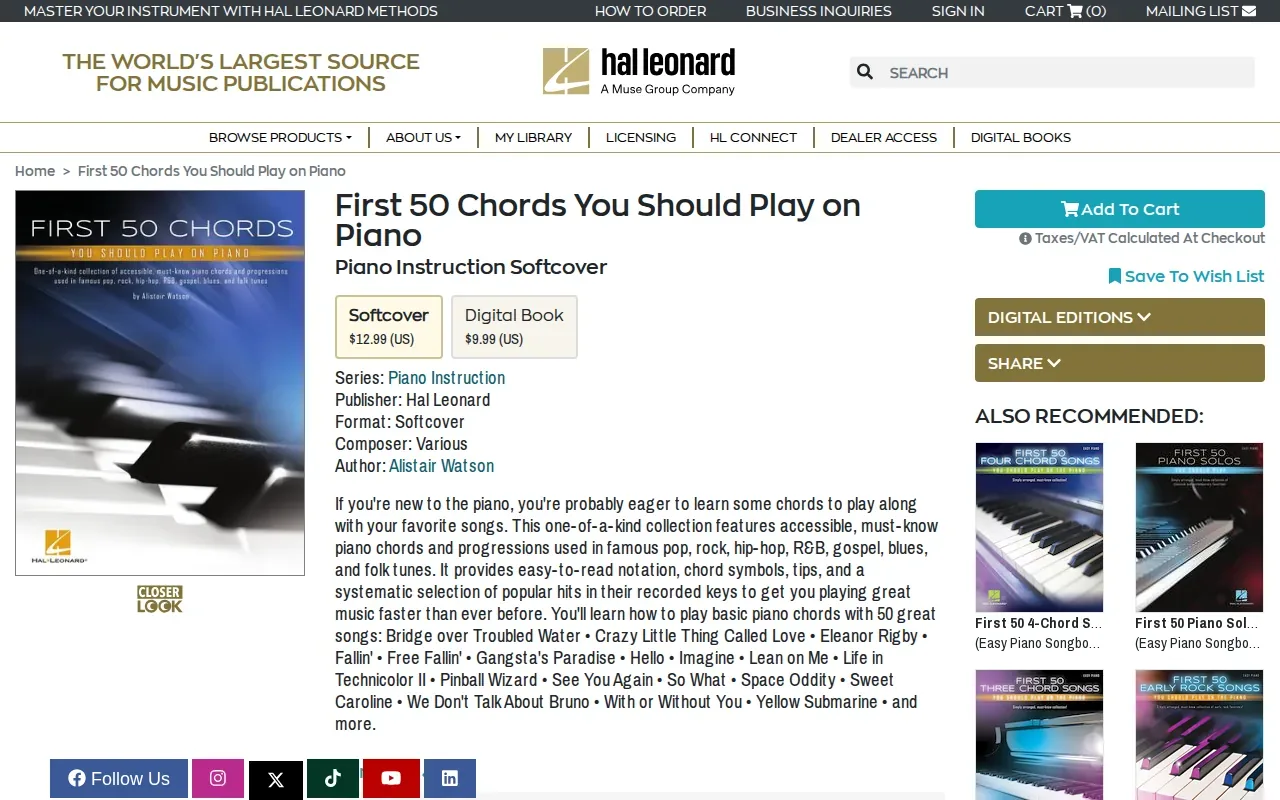
The collection uses accessible chords and progressions found in pop, rock, hip-hop, R&B, gospel, blues and folk tunes. It includes easy-to-read notation, chord symbols and tips. The song examples are in their recorded keys, so you can work with the listed material as presented.
C, E and G make a C major triad; lower E by one semitone to E flat and it becomes C minor. To name the distances between chord notes, consult the Open University lesson on intervals.
The digital edition is cloud-based and streams through MyLibrary, so it requires internet access. That format may suit you if you like a screen beside the keyboard and have a reliable connection. It’s less handy for offline practice than a PDF stored on your device.
Use the song material to practise hearing a chord in context, not only pressing the right keys. Play the chord once, then repeat it with a simple pulse. When the shape feels familiar, try changing to the next chord without lifting your hand too far.
If the hand placement itself needs attention, our beginner’s guide to playing piano chords covers triads, comfortable fingering and smooth changes.
4. Piano Adventures Scale and Chord Book 1 (by Faber Piano Adventures): Structured foundations
Piano Adventures Scale and Chord Book 1 (by Faber Piano Adventures) pairs chord work with early scale practice. It’s a fit for players who want to connect a chord with the key around it, rather than treat every shape as a separate fact.
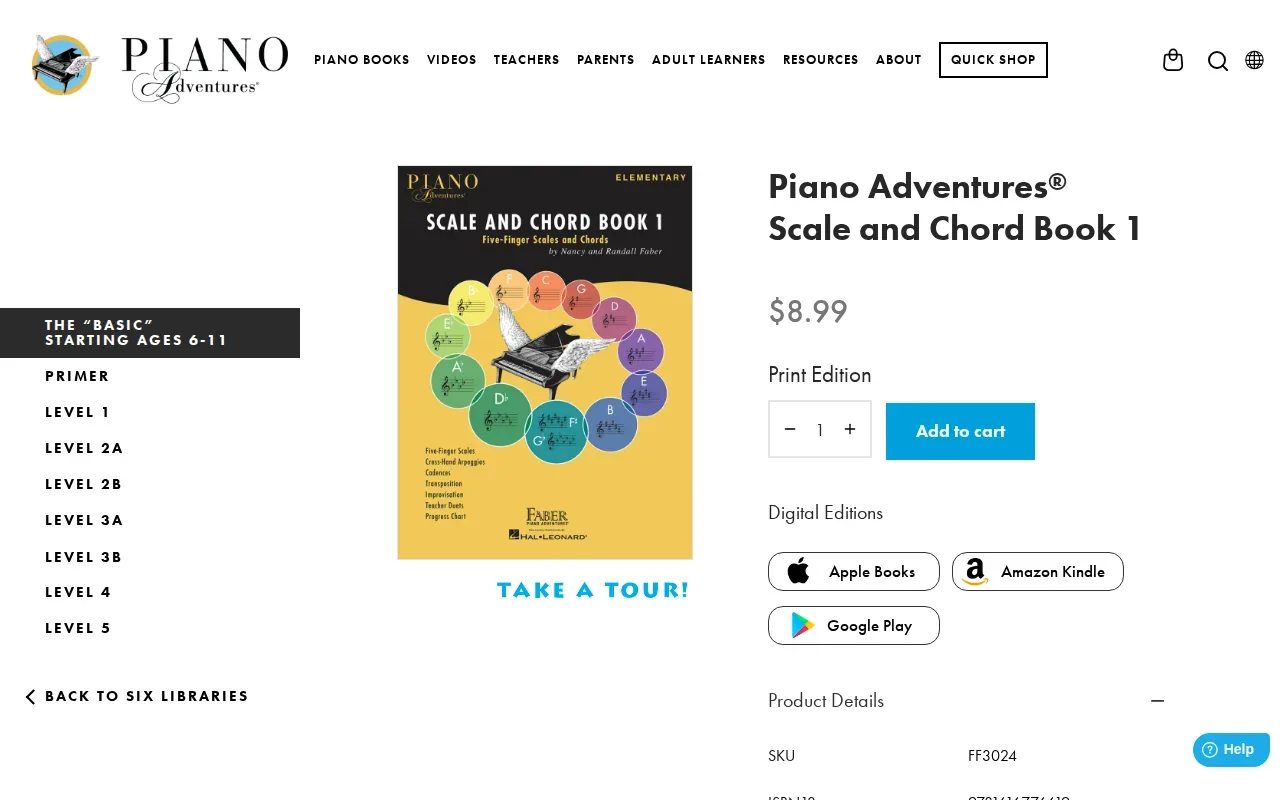
This 48-page book covers major and minor five-finger scales, cross-hand arpeggios and primary chords. Scale exercises use teacher duets for each key. The book also includes improvisation activities with prompts for imagery, character and tempo.
That combination offers a useful shift in focus. A scale asks your fingers to move through notes in order; an arpeggio plays chord tones one at a time. Try playing the five-finger scale first, then play its tonic triad, using scale degrees one, three and five. You can hear how the chord gathers notes from the key.
Improvisation prompts give you a reason to listen as you practise. Play a short scale or chord pattern, then change its pace or character to match the prompt. A metronome can keep the pulse steady while you make the expressive choices.
This is a more structured choice than a single-page chord chart, with scales sharing the page space with chords. Pick it if those foundations belong in the same practice session.
5. Skoove chord chart: A quick digital or printable lookup
Skoove chord chart is a digital chord reference with a printable PDF chart. It suits players who want to check a shape quickly, then hear what they’ve found.
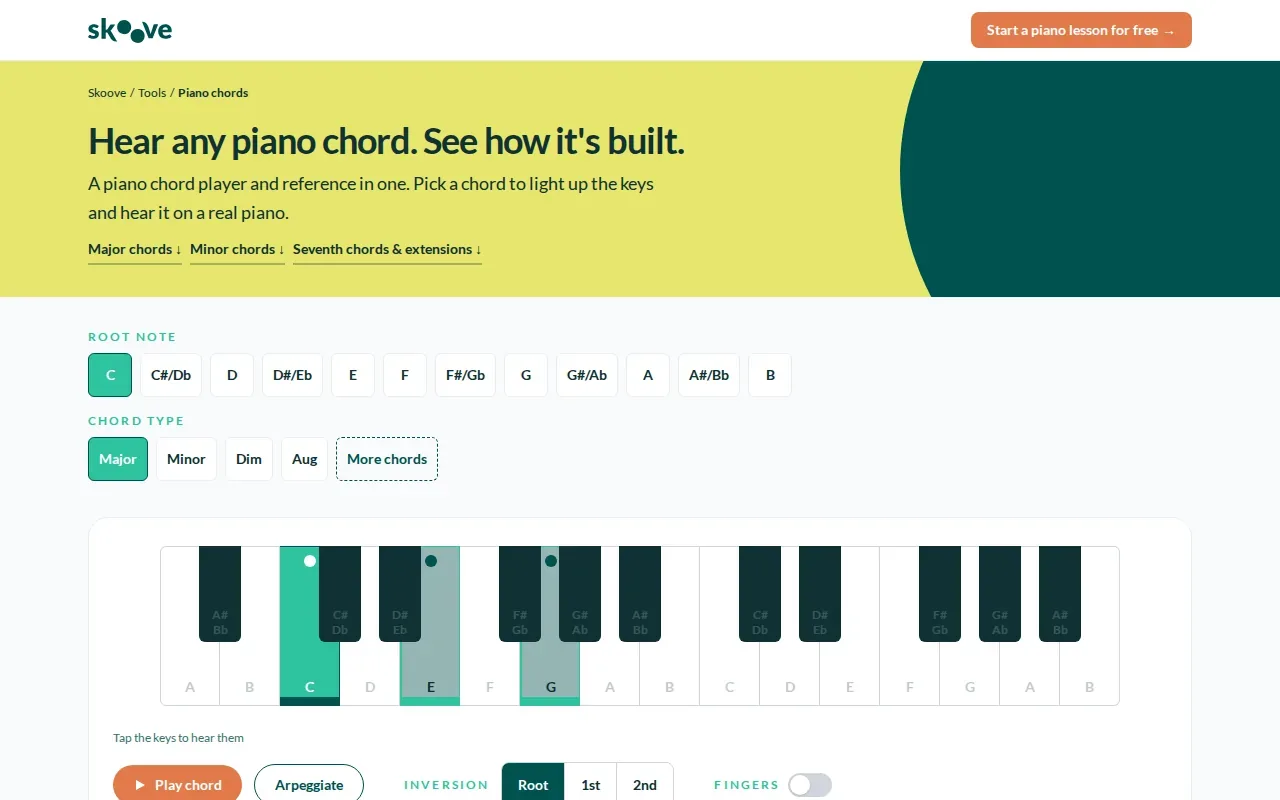
The online chord player lights up the piano keys and plays the selected chord. Its chord pages include the notes, fingerings, inversions, audio and songs that use each chord. You can also choose to download the chart as a PDF for a paper reference beside the keyboard.
That sound check is handy when chord notation feels abstract. Choose a root and chord type, then compare the notes shown with the sound. Listen to a chord as a block first; then hear it as an arpeggio, one note after another. The notes are the same, but you can hear how they fit together.
For a common progression in C major, try C, F and G, then return to C. Keep your hand close to the keys as you change chords. Once the shapes are steady, try a new order or repeat one chord for two beats before moving on.
The printable chart works well for quick reference, while the online player adds sound and fingerings. If you want a guided practice route or a broader theory lesson, a chart alone may not give you that structure.
6. The Chord Wheel by Clockworks Music: A visual way to explore harmony
The Chord Wheel, by Jim Fleser, is a visual aid for exploring chord relationships and key changes. The book is published by Hal Leonard; the product website also presents a separate app. It may suit songwriters or players who prefer to see how chords fit together before trying them at the piano.

The publisher describes it as a way to find chord relationships and key changes, with no music reading needed. It’s intended to help learners explore how chords and scales interact, including for songwriting and improvisation.
Imagine you have a short melody and want a chord underneath it. A visual harmony aid can help you consider which chords belong in the key, then test those choices by ear. Listen for the chord that feels settled, and notice which one seems to ask for a change.
That’s a different job from learning hand position or practising a chord change. A wheel can support your thinking about harmony, while your fingers still need time at the keyboard to make the sound comfortable.
If you want to pair a visual aid with a fuller theory route, our comparison of books for learning music theory looks at different ways to study the ideas behind chords.
7. The Jazz Piano Book by Sher Music Co.: Chords in a jazz context
The Jazz Piano Book, by Mark Levine and published by Sher Music Co., is a jazz piano method for players ready to explore richer chords and voicings. It’s aimed at learners who want harmony taught in the context of jazz piano, rather than a basic chord lookup alone.
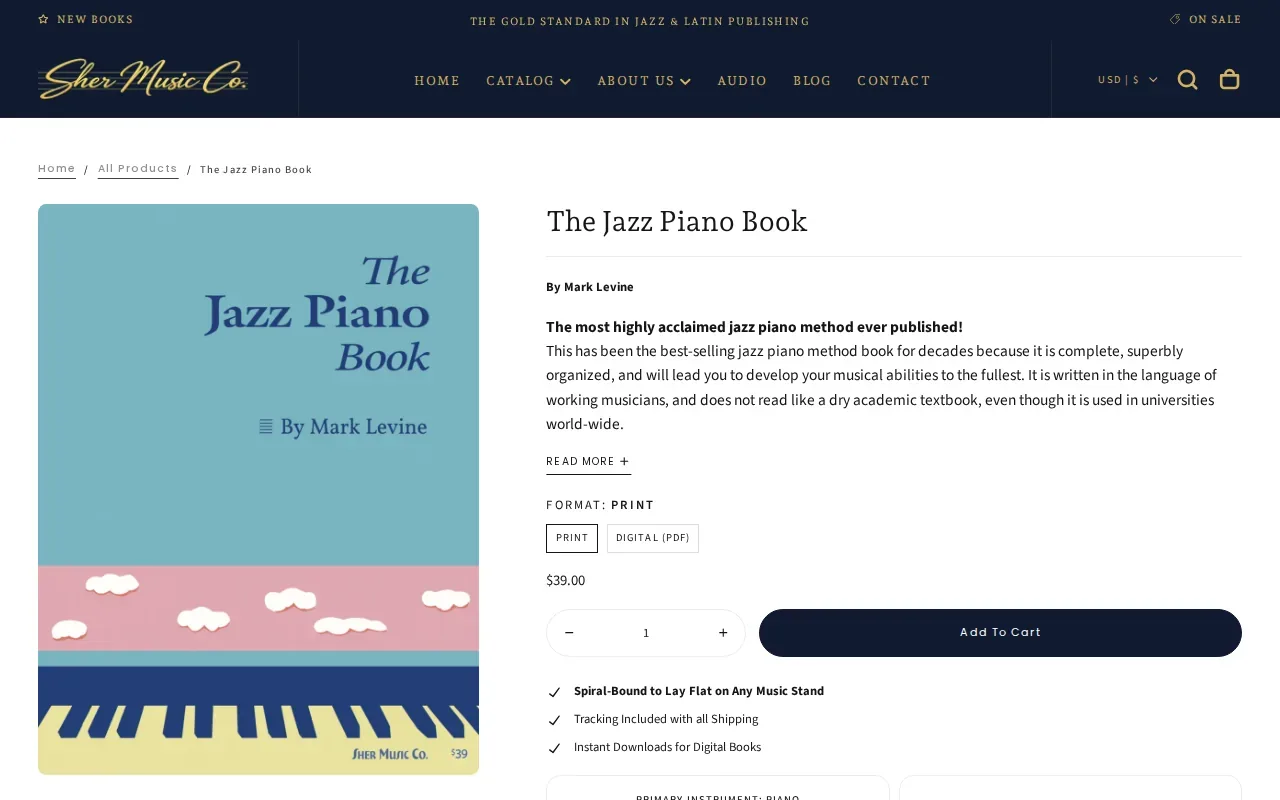
The book covers intervals and triads before moving into major modes and II, V, I progressions. It also discusses three-note voicings, suspended chords, left-hand voicings, tritone substitution and comping. Those topics can help you hear why a jazz chord may use a different shape from a simple root-position triad.
For example, a seventh chord adds another chord tone beyond a triad. Jazz voicings can then arrange or omit notes to make a part fit the piano and the music. Work slowly: play the written voicing, listen to its colour, then compare it with the simpler triad underneath.
The 300-page book is spiral-bound. Its scope makes it a more specialised choice than a beginner chord chart, so it’s likely to be most useful once basic triads and chord symbols feel familiar.
| Option | Useful when you want | Format or focus |
|---|---|---|
| Chord Compass Academy | A structured piano practice resource | 301-page downloadable PDF |
| Ultimate Keyboard Chord Book by Hal Leonard | A large chord-diagram reference | Chord diagrams and staff notation |
| First 50 Chords You Should Play on Piano by Hal Leonard | Chords used in songs | Softcover or cloud-based streaming edition |
| Piano Adventures Scale and Chord Book 1 (by Faber Piano Adventures) | Scales alongside chord practice | 48-page book |
| Skoove chord chart | Quick lookup with sound | Online player and printable PDF |
| The Chord Wheel by Clockworks Music | Visual chord relationships | Harmony and key changes |
| The Jazz Piano Book by Sher Music Co. | Jazz voicings and progressions | 300-page spiral-bound book |
Frequently Asked Questions
What should I look for in a piano chord book?
Choose a piano chord book based on how you want to learn. A chart helps you look up shapes, while a song-based book puts chords in context. If you want a routine as well as chord material, look for a structured practice resource. Also check whether the format works offline, and whether it shows chord symbols, notation or fingerings.
How do you read a piano chord diagram?
A piano chord diagram shows which keys belong to a chord, often with the root marked separately from the other notes. Find the root note first, then place the remaining chord tones as shown. If the diagram includes an inversion, check which chord note sits lowest. Play the notes together, then one at a time to hear their shape.
How can I practise changing between piano chords?
Start with two chords and move between them slowly. Keep your hand relaxed, and notice which fingers or notes can stay close to their current position. Try the change several times with a steady pulse before adding a third chord. Inversions can reduce large jumps across the keyboard, so compare them when a change feels awkward.
Can I learn piano chords without reading music?
Yes, you can begin with chord names and diagrams without reading full staff notation. Find the keys, play them together and listen to the sound. Chord symbols can also guide you through a progression. Reading notation can add another way to understand the same music, but you don’t need to wait until you read fluently to start playing chords.
Choose your next step
Try the piano-book preview
For a downloadable practice guide that you can use offline, start with Root Position, Edition 2 from Chord Compass Academy. Explore the book and its two-chapter preview, then choose one chord idea to try at the piano today.