
Learn with Chord Compass
Piano Scales Book: Six Options Compared
Compare piano scales book options for five-finger patterns, full scales and jazz study. Check coverage, format and learning support before choosing your book.
A piano scales book can help your fingers find a steady path, but the right fit depends on what you want to play next. Here are six named options, starting with Chord Compass Academy, for learners who want a clear place to begin or room to explore.
This comparison uses the publishers’ stated coverage and formats. Start by deciding whether you need five-finger patterns, full scales, or a wider course that uses scales within harmony. The entries serve different purposes, so their order is not a universal ranking.
1. Chord Compass Academy
Chord Compass Academy offers downloadable music books. Root Position, Edition 2 is a 301-page PDF. When choosing a piano book, consider whether you want material for broader piano learning or a focused scales reference; do not assume that a general piano book is a scales-only resource.
Before choosing a scales book, check which scales it covers and whether it includes fingering guidance. You can practise a scale slowly, paying attention to even timing and comfortable fingering, then gradually increase the tempo while keeping the notes clear. For a separate music-theory resource, see Music Theory, Decoded, Edition 2.
Root Position is a broader piano resource, rather than a scales-only reference. If you are comparing options, check that the book’s coverage and format suit what you want to practise. For a compact list of books aimed at beginner piano learners, see our beginner piano book shortlist.
2. Piano Adventures Scale and Chord Book 1
Piano Adventures Scale and Chord Book 1 is an introductory collection for early-level pianists. Its 48 pages cover five-finger major and minor patterns, cross-hand arpeggios and primary chords. The five-finger patterns offer a smaller pitch span before full-octave scale work.
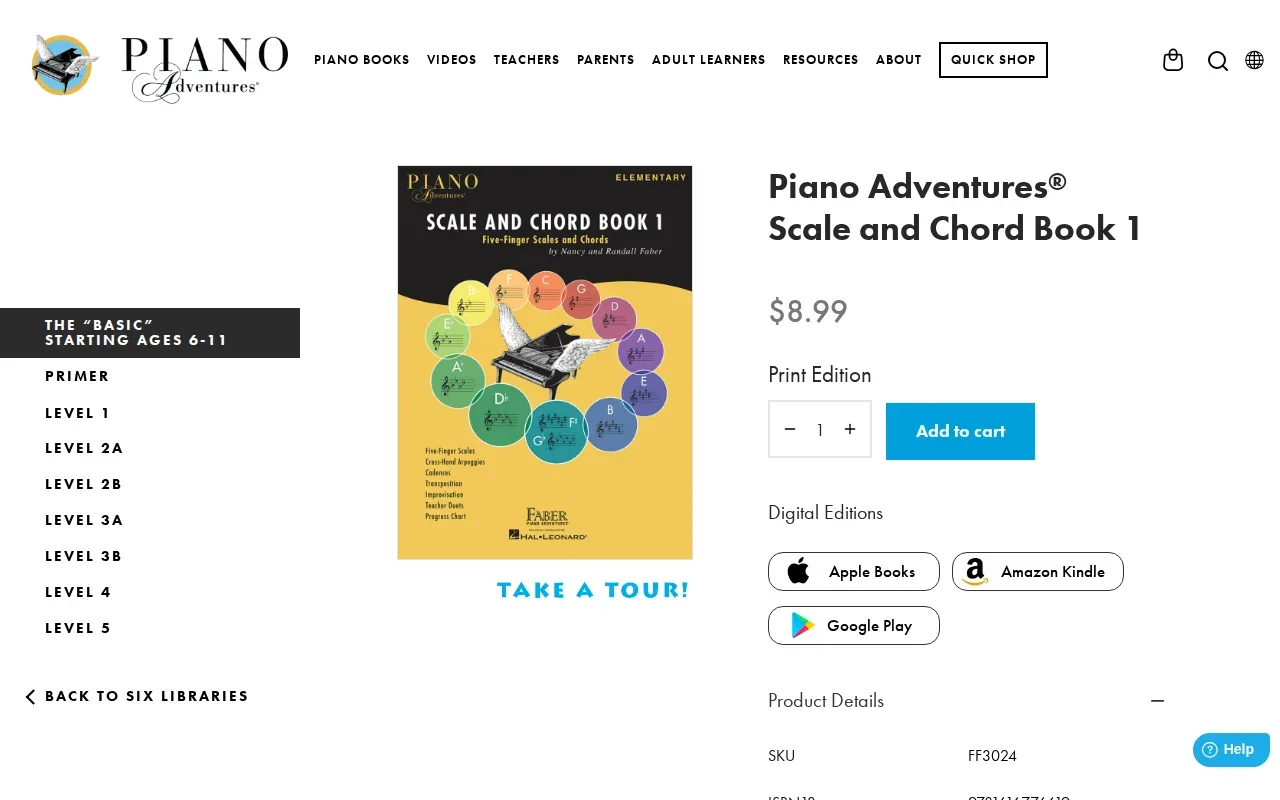
It also includes teacher duets for scale exercises. Playing a duet gives you another musical line to listen against, rather than asking you to focus only on your own fingers. Creative prompts invite improvisation in each key, with ideas around imagery, character and tempo. Those small choices can help a pattern sound like music.
Online support includes an introductory video and printable worksheets. This is a starting stage for five-finger patterns, not a reference for a full two-octave scale routine.
Pick this one when you’re building hand comfort and want chords and creative prompts beside the first patterns. A learner ready to move across the keyboard may prefer the next book in the series.
3. Piano Adventures Scale and Chord Book 2
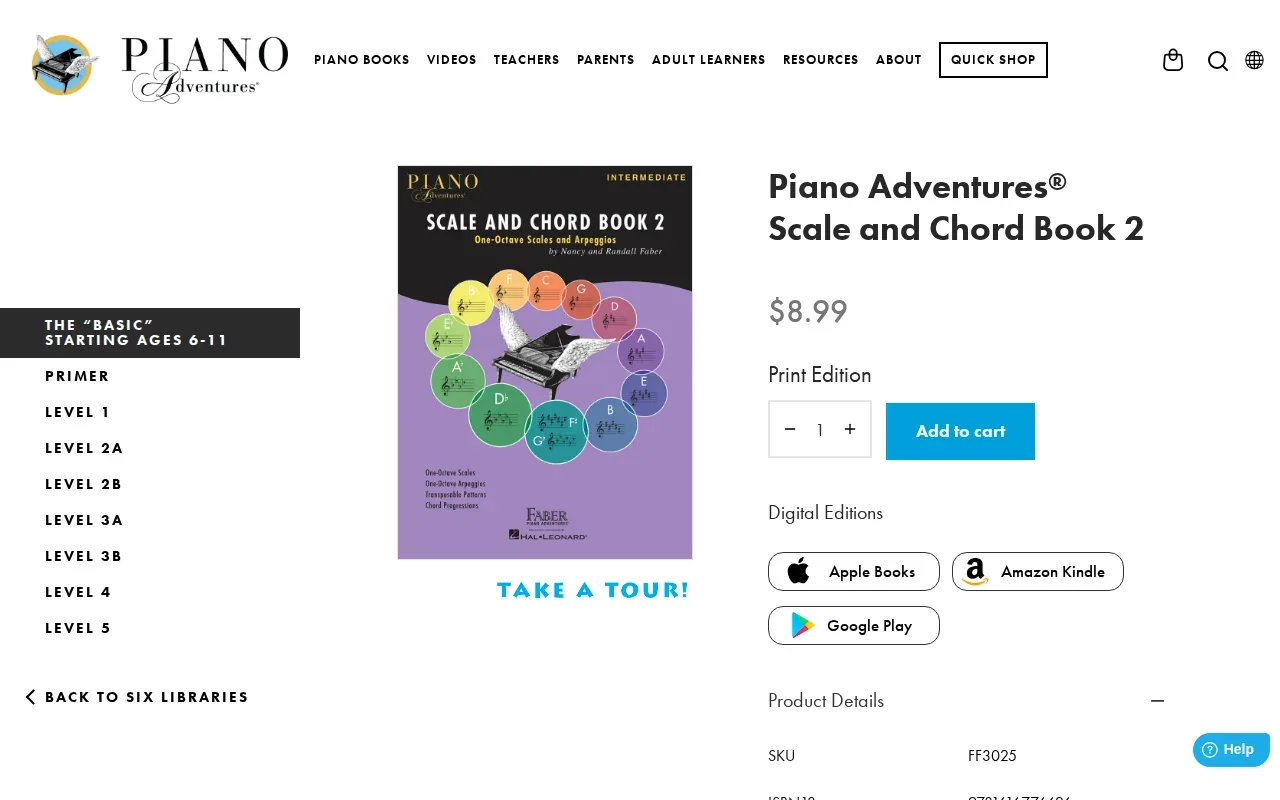
Piano Adventures Scale and Chord Book 2 is a next step for intermediate students working on one-octave scales and arpeggios. Its 56 pages pair scale patterns with chord progressions, listening, gesture and fluency strategies. The aim is to give scale degrees a musical role, not just a place in a finger sequence.
As a simple example of giving scale degrees meaning, listen for the tonic as a home note and the dominant as degree five. In a major scale, degree seven is the leading note. Playing a pattern in a new key can then become a way to hear how those notes pull towards or away from home. The transposed patterns and common progressions give you a way to explore that sound in different keys.
Teaching videos support the book, and its guided sequence includes transposed patterns and strategies for fluent playing. That makes it a stronger fit than Book 1 if you already know five-finger patterns and want to work through one-octave material with more attention to musical meaning.
It’s still focused on one-octave scales and arpeggios. Before choosing it, compare that one-octave focus with the range and fingerings you currently need.
4. The Complete Piano Scales Guide
The Complete Piano Scales Guide is a free, 43-page reference from Piano with Norbert. Its advertised coverage includes major scales and natural, harmonic and melodic minor forms. Keyboard diagrams, fingerings and key signatures provide reference material. The PDF request requires an email address; the guide also has an online version.

The guide’s practice advice starts with hands separate and a metronome at 60 beats per minute, with one note to each click. It then suggests hands together once each hand is even, and two octaves before four. Treat 60 as the guide’s suggested starting point, not a minimum speed: choose a slower pulse if needed.
It’s a compact choice when you want a clear reference rather than a longer teaching sequence. The guide also uses the circle of fifths to arrange its major keys and shows relative minor relationships. If you prefer a paper copy, its A4 format is described as print-friendly.
Use a page as a prompt, not a race. If your thumb crosses awkwardly or the beat wobbles, stay with one hand for another round before speeding up.
5. The Jazz Piano Book by Sher Music Co.
The Jazz Piano Book by Sher Music Co. is a 300-page spiral-bound book by Mark Levine. It places scales and modes within a wider jazz piano study, alongside intervals, triads, major modes and II-V-I progressions. It also covers voicings and comping, which can help connect scale practice with the chords and rhythms heard in jazz.
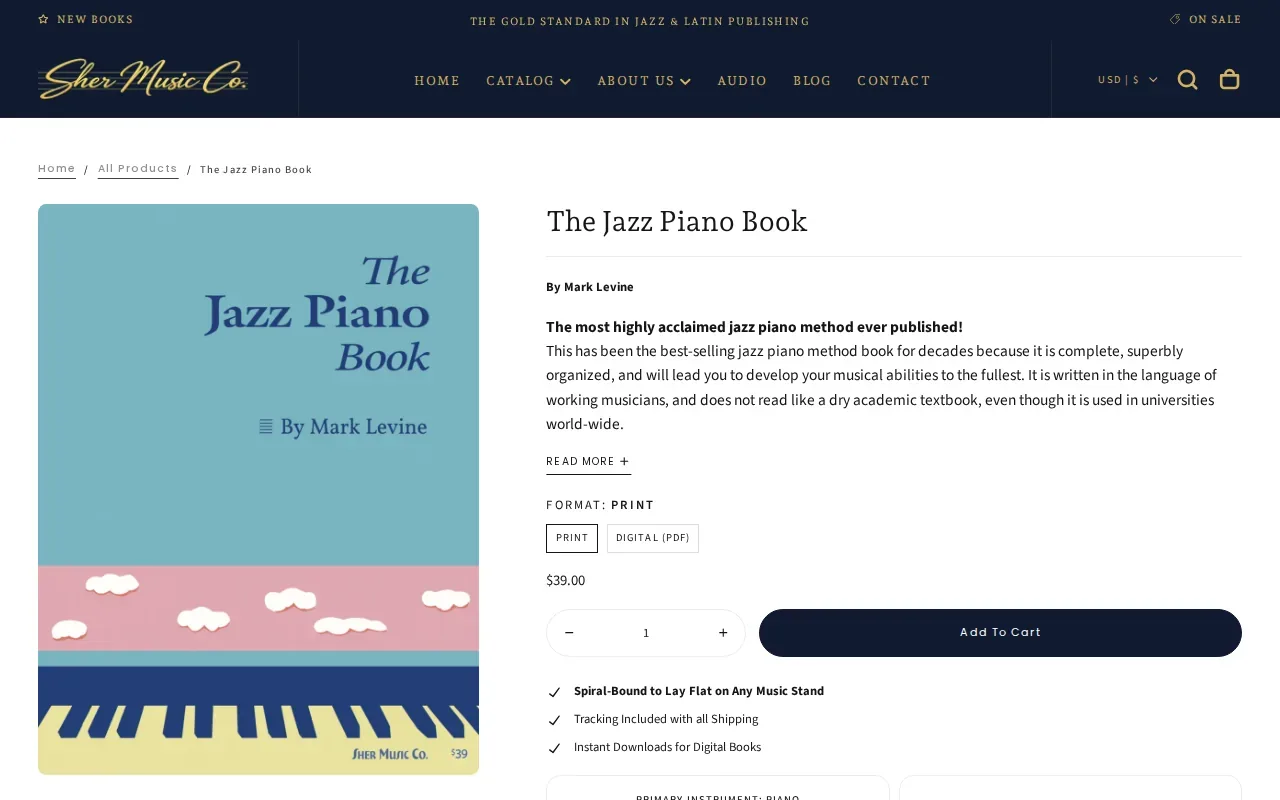
This is a better fit for a player who wants a broad jazz reference than for someone seeking a short daily scale drill. For example, you might work on a mode, then notice how it relates to a chord progression or a voicing in the same style. That wider frame can turn scale notes into material for shaping a solo or accompaniment.
Still, the 300-page scope asks for patience. You can pick one topic at a time and bring it to the keyboard, rather than expecting to work through every subject in one sitting.
6. The Jazz Piano Method by Hal Leonard
Hal Leonard Jazz Piano Method Book 1, by Mark Davis, is a structured option for learning alone or with a teacher. Its stated topics include scales and modes, chord voicings, improvisation, rhythm, lead sheets and playing solos. That mix can suit you if you want scales to sit inside a step-by-step jazz course.
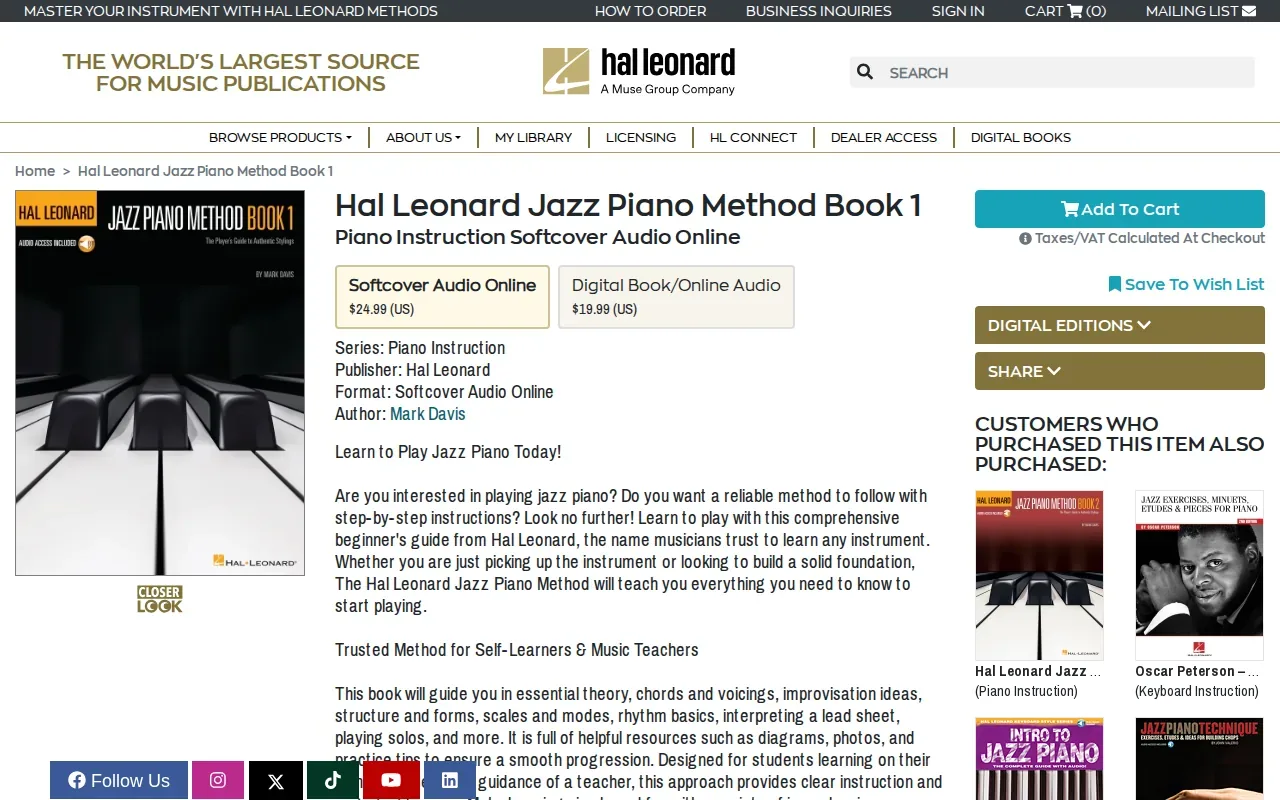
It includes online audio with demonstrations and recorded accompaniments.
Unlike a scale-only reference, the method also introduces structure and form. You can use that to connect a scale idea with a chord or a lead-sheet melody. The book’s scope is jazz piano, though, so it may not be the right first pick if your main goal is a basic classical scale reference.
Choose it for guided jazz study with audio support. A broader scale reference may be a closer match if you want to study more scale types.
Piano scales books compared by focus and learner
Use this quick comparison to match a book to the next thing you want to practise. The options differ in their teaching style, not only in the number of scale names they include.
| Option | Best fit | What you’ll work on | Format or scope |
|---|---|---|---|
| Chord Compass Academy | Beginner or returning player | Broader piano foundations; check the preview for your needs | Root Position, Edition 2: 301-page PDF |
| Piano Adventures Scale and Chord Book 1 | Early-level learner | Five-finger scales, chords and arpeggios | 48 pages; printable worksheets |
| Piano Adventures Scale and Chord Book 2 | Intermediate learner | One-octave scales, arpeggios and transposed patterns | 56 pages; teaching videos |
| The Complete Piano Scales Guide | Quick scale reference | Major and all three minor forms | 43-page reference; email required for PDF |
| The Jazz Piano Book by Sher Music Co. | Jazz improviser | Modes, progressions and voicings | 300-page spiral-bound book |
| The Jazz Piano Method by Hal Leonard | Self-directed jazz learner | Scales, rhythm, lead sheets and solos | Book with online audio |
When comparing coverage, distinguish the major-scale pattern from the different minor forms. The Open University explains tones and semitones in a major scale, while its lesson on harmonic and melodic minor shows how minor-scale notes can change. A reference that lists only natural minor will not supply those other patterns.
For a first choice, ask what you need from the next practice session. A visual reference helps you check notes and fingering. A guided book can give the session a path. A jazz method links scale work with improvisation and chords.
Frequently asked questions
Which piano scales should beginners learn first?
Beginners can start with five-finger major and minor patterns, then move to full one-octave scales when their hands feel ready. A steady pulse matters more than speed. Learn the fingering slowly, listen for even notes, then add the other hand when each hand feels comfortable on its own.
Should I learn chords and arpeggios with scales?
Yes, learning related chords and arpeggios can help you hear how a scale connects to harmony. A scale is a useful note pattern, while its chords show how those notes can sound together. Start with one key, play its scale, then try the chord and arpeggio patterns at a relaxed pace.
How do I practise piano scales without rushing?
Set a slow metronome pulse and play one note on each beat. Keep your hands separate until each part sounds even, then try them together. If the notes bunch up or a thumb crossing feels tense, slow down. The metronome can handle the strict bit while you listen for a calm, even sound.
Can a jazz piano book help me use scales for improvisation?
Yes, jazz piano methods can connect scales and modes with chords, progressions and solo playing. The Jazz Piano Book and The Jazz Piano Method both cover scales in a wider jazz context. Pick one based on whether you want a broad reference or a step-by-step course with online audio support.
Choose your next step
Try the piano-book preview
For broader piano foundations, preview two chapters of Root Position, Edition 2 from Chord Compass Academy and check whether its approach suits your next practice goal.