
Learn with Chord Compass
Best Piano Sight Reading Books to Try
Compare piano sight reading book options for new and returning players, including graded exercises, daily rhythm work and a digital reading guide.
Finding a piano sight reading book that fits your level can make the first read feel calmer and more musical. Here are six options, with a clear sense of who each may suit.
This comparison draws on the publishers’ current descriptions and samples. It distinguishes reading explanations, graded exercises and cards; it does not claim that we tested these products. Match the starting level to your reading ability, which may be different from the level of pieces you have already practised.
1. Chord Compass Academy
Chord Compass Academy is an online music education business with downloadable books for piano, music theory and music reading. Its Reading Music, Decoded, Edition 2 is a 150-page PDF for learners who want to work on notation and rhythm at a beginner level.

The downloadable PDF explains clefs, note values, key signatures, expression and score navigation. It includes a four-week reading plan and a graded collection of original eight-bar studies. These provide a sequence for practice, not a promise that everyone will reach the same level in four weeks. The product page offers a separate two-chapter preview with audio exercises.
Reading notes is only one part of a first piano book. The academy also has Root Position, Edition 2 for piano foundations and Music Theory, Decoded, Edition 2 for theory study. For a wider view of beginner resources, see our piano book picks for beginners.
Choose this one if you want a downloadable explanation of notation alongside reading studies. You can view Reading Music, Decoded, Edition 2 before deciding.
2. Progressive Sight Reading Exercises by Hal Leonard: Short, Graded Practice
Progressive Sight Reading Exercises, by Hannah Smith, is published by G. Schirmer and listed by Hal Leonard. It offers short reading exercises that move through increasing difficulty. It suits learners who prefer a steady stream of small reading tasks over longer pieces.
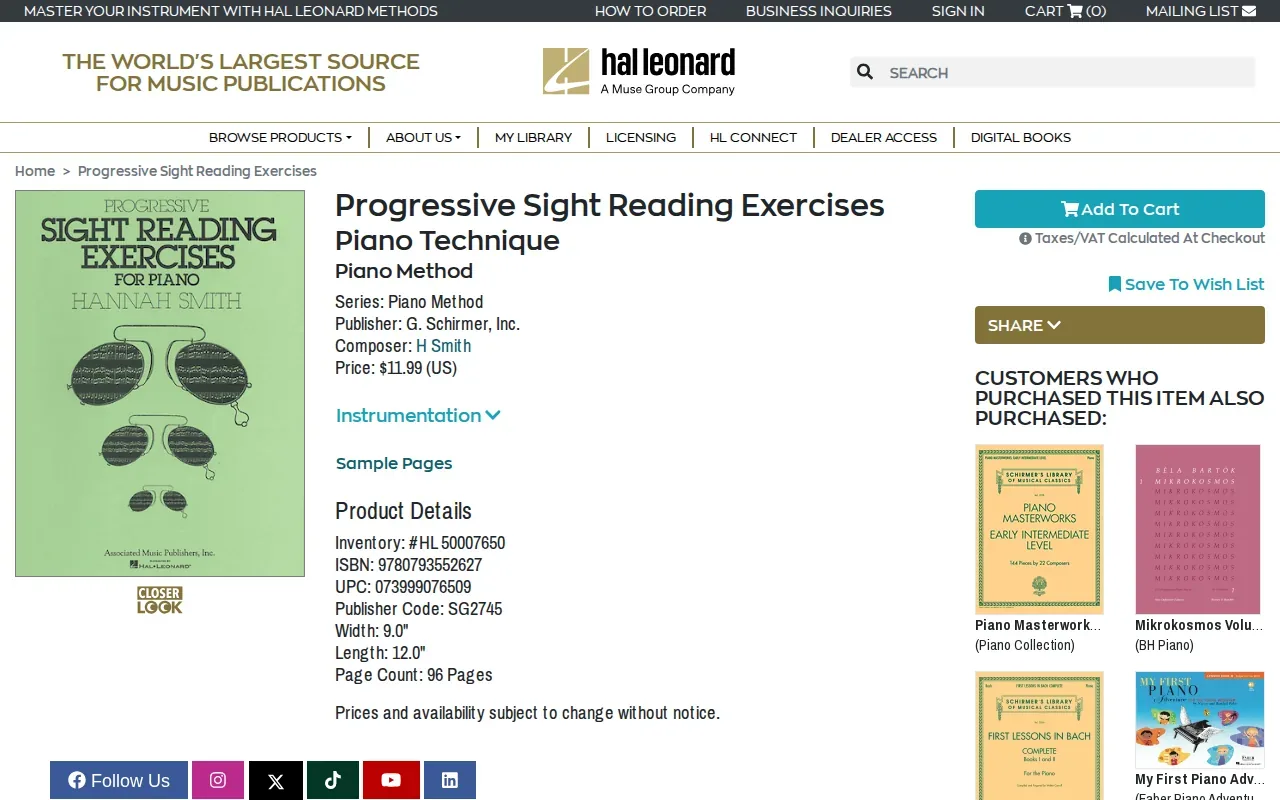
Short examples are useful when you want to focus on the page without first learning a whole piece. You can look ahead for the pattern, find the starting notes, then play through once without stopping. The next exercise gives you another chance to read fresh music rather than rely on memory. For a reference when matching written pitches to the keyboard, use Open Music Theory’s keyboard and pitch-name explanation.
As you practise, notice how each new feature changes what you need to watch for. If a passage feels too busy, slow your eyes down before you slow your hands down: scan the rhythm and note shapes first.
This is a focused pick for self-directed practice or a short addition to a lesson routine. It is less suited to someone who wants a reading book built around longer repertoire pieces. The large number of brief exercises also calls for a measured pace. There’s no need to race through them; one careful first read can be more useful than several rushed attempts.
When you practise, keep the task simple. Read a small group of exercises, then stop and name the pattern that changed. For help with the staff, note names and rhythm basics, our steps for reading piano sheet music can sit alongside your daily pages.
Pick this book if you want a large bank of short, progressively harder reading prompts.
3. Sight-Reading for Fun by Stainer & Bell: A Traditional Printed Approach
Sight-Reading for Fun, by Peter Lawson and published by Stainer & Bell, includes a Preliminary Book for early reading. The publisher describes separate-hand tunes around middle C, basic note and rest values, steps, leaps, slurs and introductory dynamics. The screenshot shows this preliminary volume, so compare its sample with your current reading before choosing a later grade.
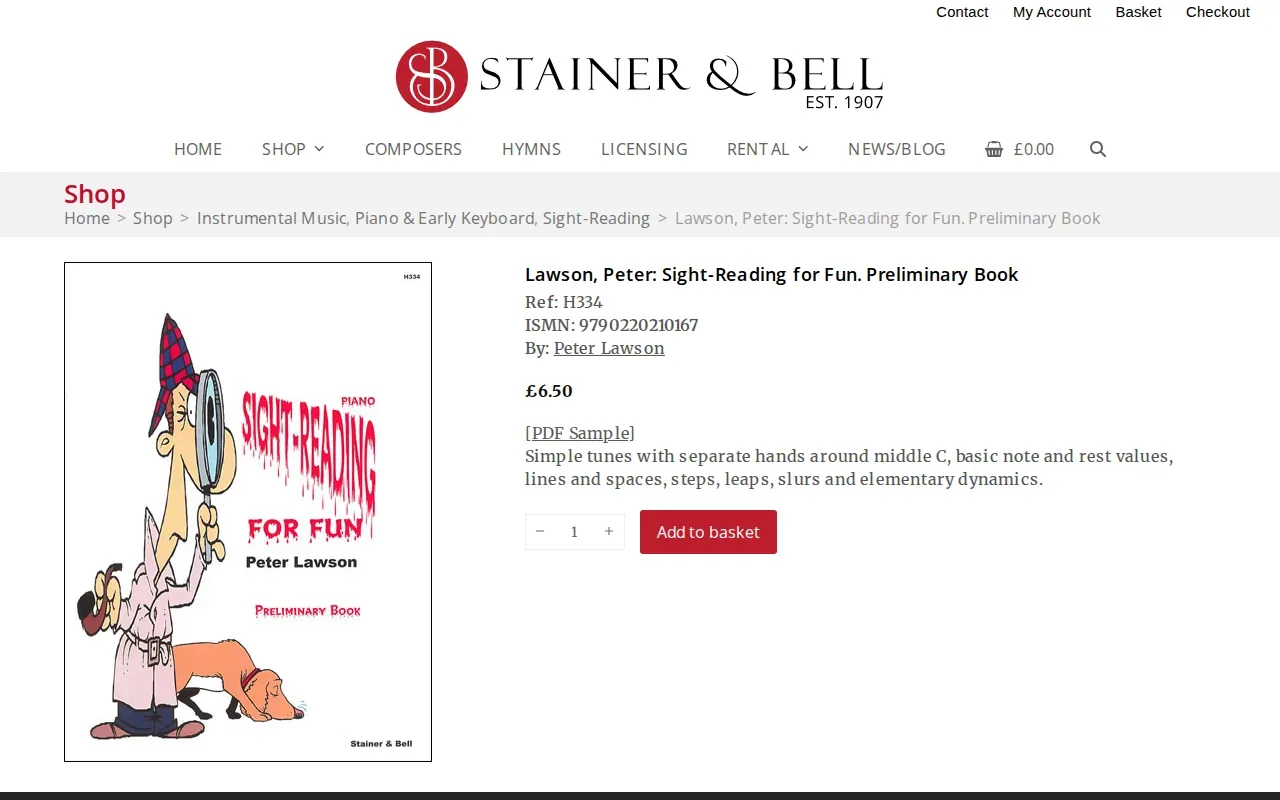
When practising sight-reading, try looking over a new passage before playing. Spot the key and time signatures, then note any leaps or rhythm shapes that could catch you out. When you begin, keep the pulse moving and let a missed note pass. The aim is to keep reading the next part of the line, not to turn each slip into a stop-and-repair session.
Inspect any book’s sample at the size you would use on your music stand. Check whether you can distinguish lines, spaces and accidentals comfortably. This is a personal format check, rather than a claim that one publisher’s notation is too small.
4. Sight Reading and Rhythm Every Day Book 1A by The FJH Music Company: Daily Reading and Rhythm
Sight Reading and Rhythm Every Day, Book 1A, by Helen Marlais and Kevin Olson, is an early-elementary piano book published by The FJH Music Company. That level may suit a learner who is beginning to read notation, while a more experienced player may prefer material matched to their current reading skills.

When choosing a sight-reading book, consider whether its level feels manageable and whether the exercises give you a useful opportunity to practise steadily. A short, regular reading routine can help you build familiarity with notation; you can keep the work light and return to it as part of your practice.
For example, before playing a short exercise, pause to identify the time signature and tap the rhythm. Find the starting note, then look for intervals and patterns rather than naming every pitch in isolation. The Open University explanation of time values can help you check how note lengths relate before you play. Once you play, notice any dynamic or articulation mark and let it shape the sound.
You could use a suitable reading exercise as a warm-up before moving to repertoire, then return to your main piece with your eyes focused on the page. Adjust the pace to your comfort: if a passage feels difficult, slow down and check the notes and rhythm before trying it again.
Choose this book if early-elementary reading and rhythm work matches your current study. If you are unsure whether the level is appropriate, compare it with music you can already read and play comfortably.
5. Four Star Sight Reading and Ear Tests Level 1 by The Royal Conservatory of Music: Reading with Listening Tasks
Four Star Sight Reading and Ear Tests Level 1 by The Royal Conservatory of Music gives students assignments arranged for daily sight-reading practice. The Level 1 label makes it a candidate for someone looking for a clear early point of entry.
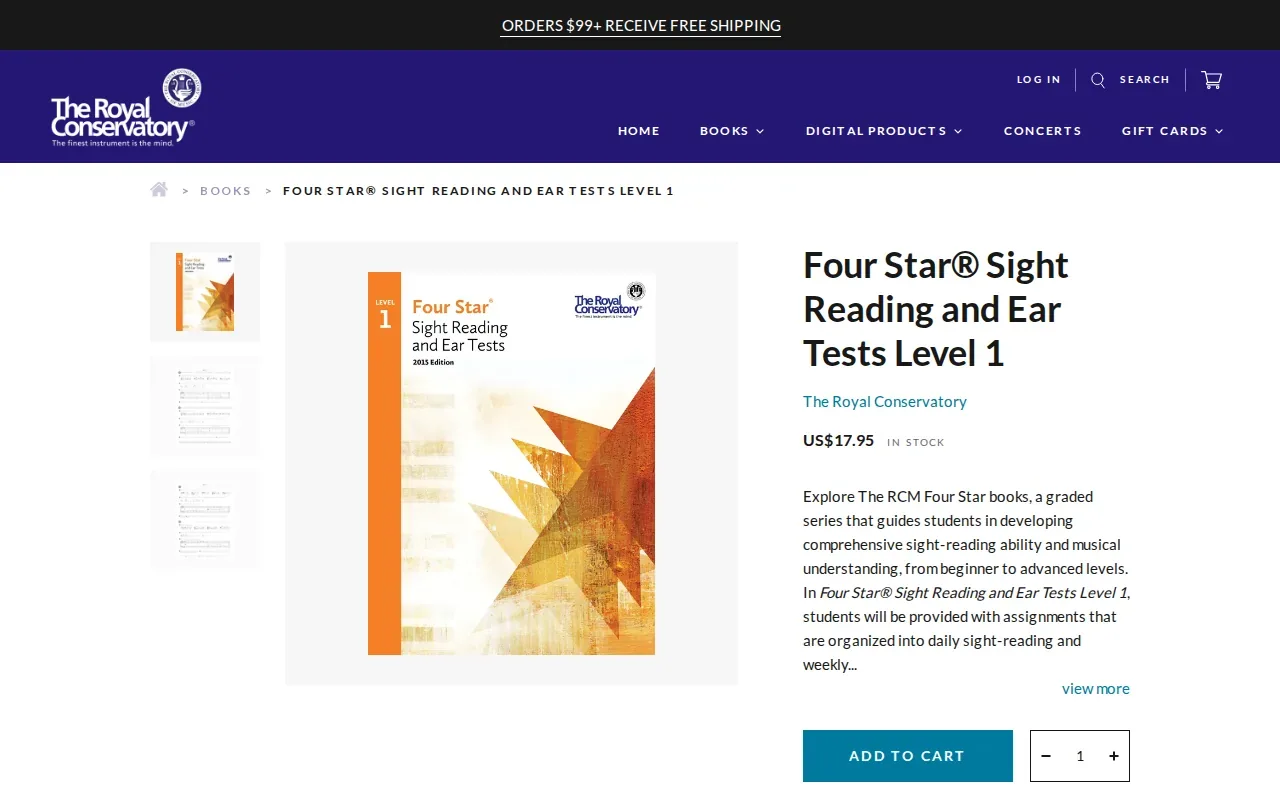
The book pairs daily sight-reading assignments with weekly ear tests. The publisher states that daily online ear-training activities are available separately, so do not assume that an online subscription is included. That pairing may suit a learner who wants reading practice to sit alongside listening work in their study. Keep the two aims distinct as you practise: first notice what the score asks, then give your attention to the listening task.
Daily assignments can help a teacher or learner place short reading work into an existing routine. For instance, set the day’s reading task before repertoire practice, then move on once you have made one steady attempt. There’s no need to repeat a first-read passage until it feels memorised. The point is to respond to unfamiliar notation in time.
Level 1 is a useful starting label, but it doesn’t tell you on its own whether every task will feel comfortable. Match it to what you can already read. If you can follow the notes and pulse without stopping at each bar, try a page and see whether the next step feels like a stretch rather than a wall.
Choose this option if you want daily reading assignments with an ear-test element at Level 1. Its combined focus may be less fitting if you only want a large set of notation drills.
6. Sight Reading & Rhythm Cards by Piano Safari: Flexible Card-Based Drills
Sight Reading & Rhythm Cards by Piano Safari are available as a pack for Levels 1, 2 and 3. The cards can supplement a standard reading method, making them a flexible choice for a learner or teacher who wants extra short drills without replacing the main book.

The cards can be used alongside a standard reading method, giving learners another format for brief reading practice.
For a simple practice routine, look over a short reading prompt before playing, then keep an even pulse. A teacher or self-directed learner can use a brief task as one part of a practice session.
Use a short task beside your usual lesson book; it needn’t take over the whole practice session. Keep the pulse even, and take time to look at the prompt before you play.
Use the table to match the format to the kind of practice you want.
| Option | Best fit | Practice format |
|---|---|---|
| Chord Compass Academy | Beginner notation and rhythm study | Downloadable PDF with notation explanations and studies |
| Progressive Sight Reading Exercises | Many short exercises that progress in difficulty | Exercise collection |
| Sight-Reading for Fun | Early reading in the Preliminary Book | Printed short reading tunes |
| Sight Reading and Rhythm Every Day Book 1A | Early elementary daily reading and rhythm work | Book-based daily plan |
| Four Star Sight Reading and Ear Tests Level 1 | Daily assignments with reading and listening tasks | Level 1 assignments |
| Sight Reading & Rhythm Cards | Extra short drills beside a standard method | Cards for Levels 1, 2 and 3 |
Cards are especially handy when you want a brief task that sits beside your usual lesson book. They needn’t take over the whole practice session. Our piano sight-reading practice routine shows how to separate preparation, the first attempt and a short review.
Frequently Asked Questions
How often should I practise sight reading on piano?
A short, regular session is a good starting point. Try one or two unfamiliar exercises before your main piece, and keep the pulse moving even if you make a mistake. The task is to keep reading ahead. If the notes feel too hard to follow, choose an easier page rather than repeating the same passage until it becomes familiar.
How do I choose a sight-reading book for my level?
Choose a level where you can follow most of the notes and rhythm without stopping at every bar. The remaining challenge should come from a few unfamiliar patterns, not from every feature at once. Check whether the book uses short drills, longer pieces, daily tasks or cards, then pick the format you’re most likely to use.
Can I use sight-reading exercises as a piano warm-up?
Yes, a short reading task can sit at the start of a practice session. Look over the key and time signatures first, then try a fresh example at a steady pulse. Move on after one focused attempt. That keeps the warm-up about reading on the spot, rather than turning it into a piece you practise from memory.
What’s the difference between sight reading and learning a piece?
Sight reading means playing music you haven’t practised before. Learning a piece involves returning to the same music so you can work on its notes and expression over time. Both are useful, but they ask for different habits. During a first read, keep moving through the score; during piece practice, you can pause to work on details.
A comfortable next step
For beginner and returning players who want a downloadable reading guide, explore Reading Music, Decoded, Edition 2 from Chord Compass Academy. Try the two-chapter preview to see whether its explanations and studies suit you.