
Learn with Chord Compass
How to Play Piano with Both Hands: 5 Steps
Learn how to play piano with both hands with five gradual exercises for hand coordination, steady rhythm and different note patterns at a comfortable pace.
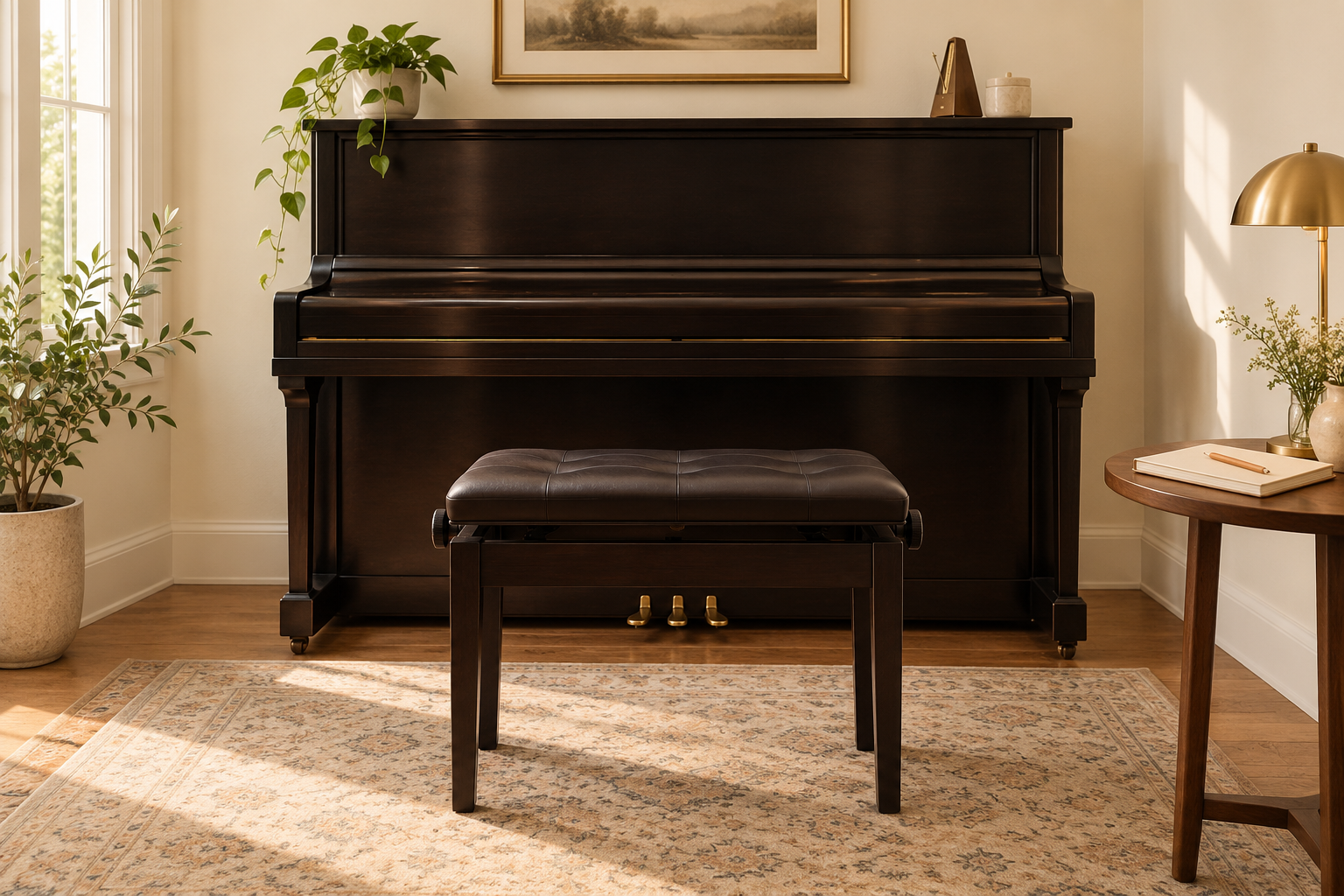
Your right hand has the tune, your left has the accompaniment, and suddenly they seem to disagree. Learning how to play piano with both hands starts with small, clear steps, not speed. Try these five exercises in order, and let each hand learn its part before you ask them to play together.
Step 1: Prepare Each Hand and Learn the Parts Separately
Start by giving each hand one job at a time. Choose a short passage, perhaps one bar or a simple four-note pattern. Play the right-hand part alone, then the left-hand part alone. Keep the sound even and use the same fingering each time.
Before you play, sit at a distance where your elbows can move freely. Let your fingers follow a comfortable natural curve and keep the wrist able to move, rather than fixing it in one shape. Begin with gentle playing. Avoid forceful stretches or pressing harder than the sound needs.
Practise the left-hand part first if it feels less familiar. Say the note names or count the beat while you play. If you need to stop and search for each key, stay with that hand for now. Switch to the other part only when the first feels settled.
A useful readiness check is to play a short section three times in a row without losing the notes or changing the fingering. You don't need to play from memory. You do want to know where your hand is going next, so adding the other part doesn't leave you guessing about both at once.
Small sections help you focus on the part that needs work. The same idea sits at the heart of productive piano practice and comfortable technique: keep the task clear enough that you can hear what needs attention.
By now, each hand should have a clear part to play on its own. If one part still feels uncertain, give it another turn before joining the hands.
Step 2: Play the Same Notes with Both Hands
Begin with a simple coordination drill: play the same note name in two different octaves at the same time. Find middle C, then find another C an octave below or above it. Place one hand on each note and press both keys together. Listen for one clear, joined sound.
Move on to C, E and G, the notes in a C major chord. Play each pair together, pause, then move to the next pair. The key signature of C major has no sharps or flats, and a C major chord uses C, E and G. Keep your hands at a comfortable distance rather than reaching for a wide stretch.
At first, use the same finger in each hand if that makes the movement easier. The aim is to land together, not to show off a fancy fingering. Once the notes sound at the same moment, lift both hands and start again. A brief pause helps you reset instead of rushing into the next attempt.
If one hand keeps arriving late, remove the note names from the task. Choose one comfortable key for each hand, then press both keys on a spoken count of “one”. Try it again on “two”. Once the timing feels clear, return to the C, E and G pattern.
Chord Compass Academy's piano books connect hand technique with music reading and theory. If you're also choosing a structured resource, this guide to the best piano books for beginners can help you compare what suits your way of learning.
By now, you should be able to play a few matching notes together without forcing your hands. Keep the pattern short until the sound feels even.
Step 3: Combine the Hands with a Steady Pulse
Now give each hand a different part while keeping one steady beat underneath. Try one bar of 4/4 in C major. Play a low C with your left hand on beat one and hold it for all four beats. At the same time, play C, D, E, D with your right hand, one note on each beat. Count “one, two, three, four” at a pace where every note has room to land.
Start slowly. Set a metronome to a comfortable pace, or tap a steady beat with your foot. A metronome marks regular beats; use it as a guide, not as a judge. If its click makes you tense, switch it off and count aloud until the pulse feels steady again.
First, tap the rhythm on your knees. Tap the left hand's part with one hand and the right hand's part with the other. Then move to the keys and keep counting. This separates the timing problem from the task of finding notes.
When you can play one bar without stopping, repeat it a few times. Don't raise the tempo just because the first attempt went well. Make a small increase only when you can keep the beat and the note lengths steady. If the pattern falls apart, lower the speed or return to tapping.
You can also rehearse away from the piano. Picture your left hand playing its note while the right moves through the pattern. Silently count the beat and imagine the sound. Then sit down and try it. Mental rehearsal won't replace playing, but it can make the order of the movements easier to recall.
When you work from sheet music, scan both staves before you start. Notice which notes begin together and which hand moves while the other holds a note. If the symbols still feel hard to track, build that skill with a step-by-step approach to reading piano sheet music.
By now, you should have one short pattern that stays with a steady pulse. Let the metronome handle the strict bit while you listen to the shape of the phrase.
Step 4: Practise Different Rhythms Between the Hands
Independent hands don't have to move at the same rate. Start with a simple contrast: let the left hand play one note on each beat, while the right hand plays two even notes per beat. Count “one and, two and” aloud. The right hand moves on each number and each “and”; the left plays on the numbers. With crotchet beats, these are quavers against crotchets. The Open University’s explanation of note durations shows the two-to-one relationship.
Practise the right-hand rhythm alone first. Then play the left-hand rhythm alone. Next, tap both rhythms on your knees before you try the keys. This gives your hands a chance to learn the timing without also searching for notes.
When that feels steady, try the reverse. Let the right hand play one note per beat while the left plays two. This can feel unfamiliar, especially if your left hand has had less practice. Keep the movement small and give the left-hand pattern a few extra turns.
Only add a new rhythm when the current one stays clear. An optional later task is three even notes against two in one crotchet beat: triplet quavers against ordinary quavers. A triplet divides a duration into three equal parts where two of that note value would normally fit. To tap the coordination slowly, divide the whole beat into six equal slots. Tap the triplet hand on slots 1, 3 and 5, and the other on slots 1 and 4. Both start together again at the next beat.
If you lose the pulse, pause and say the count without playing. Then tap the rhythm again. You might also keep one hand on a single key while the other plays its pattern. That removes extra movement without changing the timing you are learning.
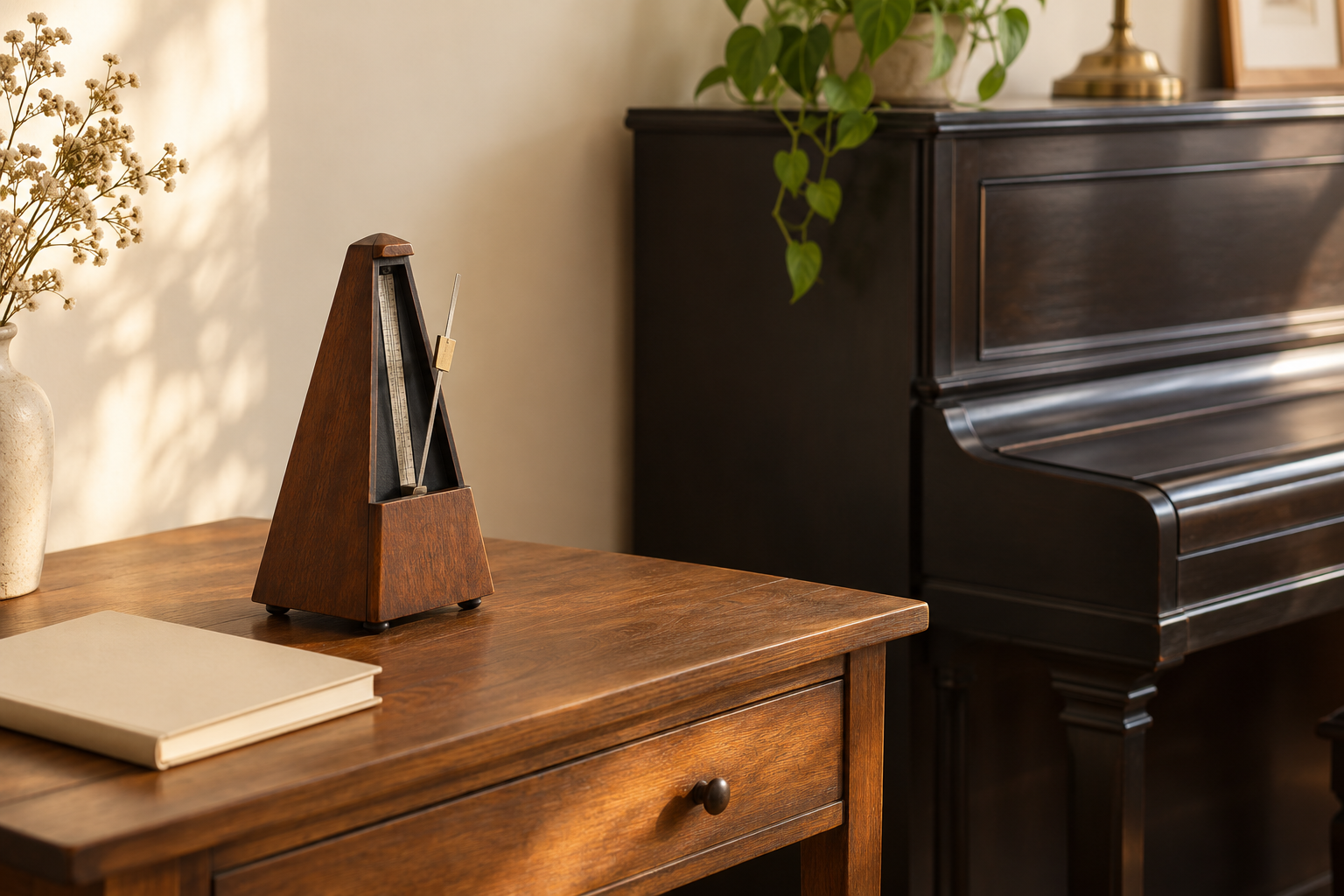
Chord Compass Academy's Root Position, Edition 2 takes a wider approach to piano foundations, bringing practice together with technique, rhythm and harmony. Use a simple rhythm drill here as a small daily task, then move on when you can keep both parts distinct.
By now, you should be able to feel two different rhythms against one shared pulse. Stay with the easier version if the triplet pattern still feels tangled.
Step 5: Put the Parts Together and Troubleshoot
Choose a short passage that uses both hands, such as a melody over a repeated bass note. Read one beat across both staves before you play. Ask yourself: which notes begin together, which hand moves next, and which note needs to keep sounding?
Start with one or two beats. Play them slowly enough to prepare the next movement. If you miss a note, don't restart the whole piece. Stop just before the tricky moment, work through that small span, then add the beat that follows.
Pay attention to note length as well as note choice. If the right hand holds a note while the left moves, keep the right-hand key down. If one part has a rest, let that hand stay quiet while the other continues. The two hands share a pulse, but they don't have to make a sound on every beat together.
For a repeated chord pattern, try playing a left-hand C and G while the right hand plays a short melody using nearby white keys. Keep the bass notes in place while the tune moves. Once that feels comfortable, change the left-hand notes to another simple chord shape. This gives you an early taste of how melody and harmony fit together.
Notice the common snags:
- Rushing: Slow down until you can prepare the next note before playing it.
- Tension: Pause, let your shoulders settle, and return with a lighter touch.
- One hand taking over: Practise each rhythm by tapping, then return to the keys.
- Losing your place: Reduce the passage to one beat or one bar, then join it to the next part.
When a passage keeps breaking, mark the exact moment. Perhaps one hand must hold a note while the other changes, or both hands need to begin together. Name that event, practise it slowly, then put it back into the phrase.
By now, you should have a small section you can play from start to finish at a calm pace. Keep practising the same section until its rhythm feels settled, then add the next few notes.
Frequently Asked Questions
How long does it take to play piano with both hands?
It depends on the passage and how familiar each hand is with its part. Start with a few notes or one short bar, and practise at a pace where you can stay relaxed. Some patterns come together quickly; others need more separate practice. Use steady, accurate playing as your guide rather than a fixed deadline.
Should I learn each hand separately first?
Separate practice often helps when notes or rhythms are new, but it is not a rule for every passage. A very simple pattern can be learnt with both hands together. Once each hand can play its part without frequent stops, join them at a slow pace. Return to hands-separate practice whenever one part becomes uncertain. It isn't going backwards; it gives you a clearer way to solve the problem.
What is the easiest two-hand piano exercise?
Play the same note name in two different octaves at the same time, then repeat with two or three nearby notes. This trains your hands to begin together before they take on different parts. When the timing feels clear, keep a simple bass note in one hand while the other plays a short melody.
How can I keep both hands in time?
Count aloud or tap a steady beat before you play. Practise each hand's rhythm alone, then tap both rhythms together away from the keys. At the piano, use a slow metronome only if it helps you hear the pulse. If the beat disappears, make the passage shorter and begin again at an easier speed.
Choose your next step
Try the piano-book preview
For a structured next step, explore Root Position, Edition 2 from Chord Compass Academy. Try the two-chapter preview on the product page before choosing the piano PDF.